
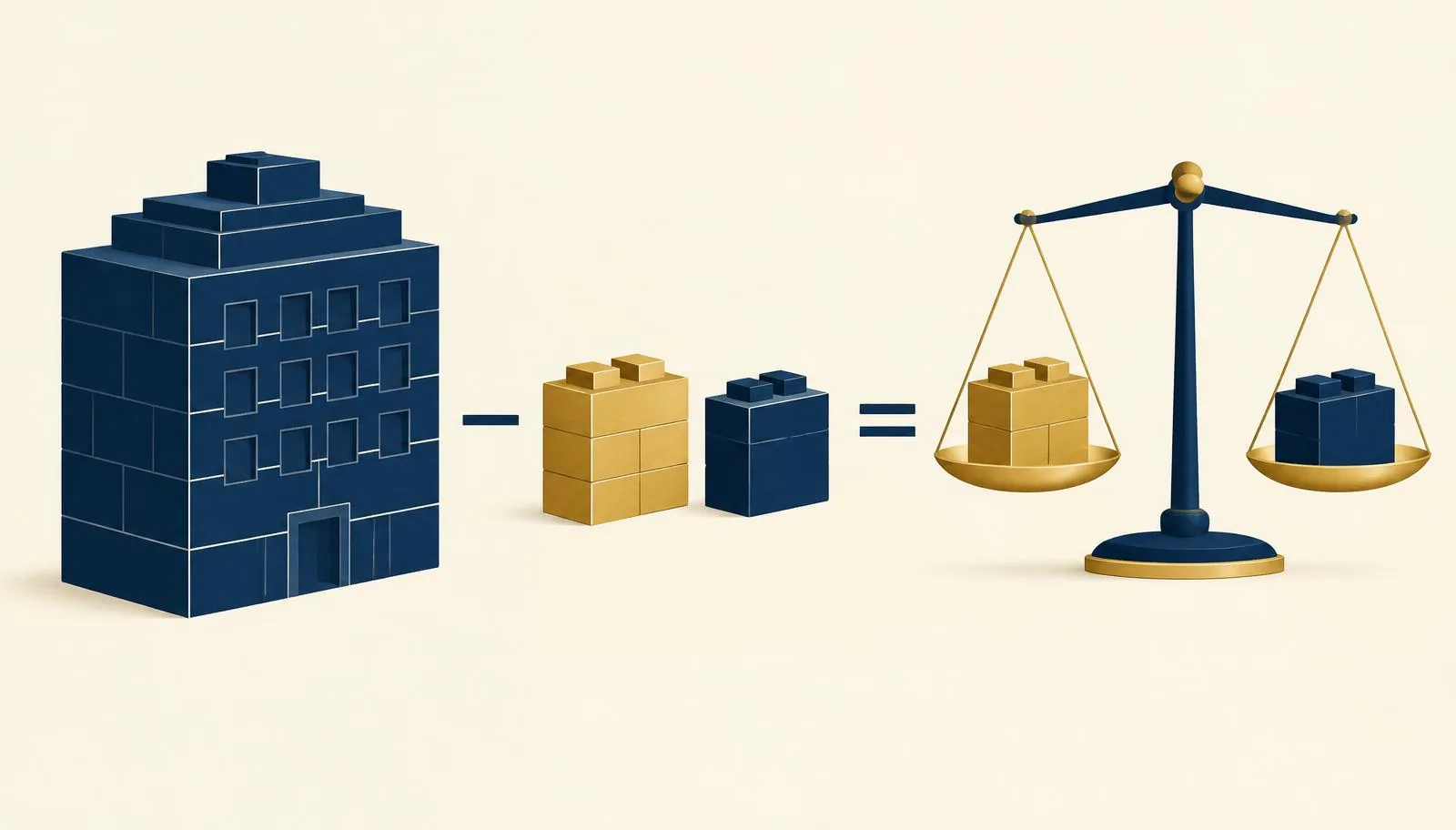
Meet Mark and Ridgeway Electrical Services.
Mark started Ridgeway Electrical Services 15 years ago. The Perth company wires commercial fit-outs, maintains switchboards for strata managers and holds a handful of long-running maintenance contracts. It employs 28 people and Mark owns every share.
Over the years, Mark drew more from the company than his salary. Some went into a home renovation, some into a holiday unit. His accountant put the drawings under a written Division 7A loan agreement. At the valuation date the balance owed by Mark to the company is $420,000, with four years of a seven-year term remaining.
A larger electrical group now wants to buy 100% of Ridgeway’s shares. Mark’s first question is simple: “Is that $420,000 extra money in my pocket?” The buyer’s first question is the opposite: “Why would we pay for a loan the vendor owes himself?”
Both are partly right. The loan is a real asset of the company—but whether it adds value to the owner depends on how it is treated at completion and whether it can actually be recovered.
- Business & location
- Commercial electrical contractor · Perth, WA
- Ownership
- Mark owns 100% of the shares
- Transaction examined
- Sale of all shares to an unrelated buyer
- The loan
- $420,000 owed by Mark to the company
- Question being illustrated
- Effect of the loan on ordinary equity value

Ridgeway, Mark, the buyer and every figure are invented. The loan’s compliance and the transaction terms are expressly assumed. No client result, sale evidence or tax outcome is represented.
First, decide what kind of item the loan is.
Back to questionsHow does a Division 7A loan affect the value of a company?
A valuer usually begins with the operating business: maintainable earnings multiplied by a supportable capitalisation multiple, or another appropriate method. That produces enterprise value—what the operations are worth regardless of how they are funded.
Mark’s loan does not generate Ridgeway’s electrical earnings. It is a non-operating receivable. Its interest income is excluded from maintainable earnings so the loan is not counted twice—once through the multiple and again as an asset.
The principle being tested: operating value comes from the business; the loan is considered separately in the bridge from enterprise value to equity value, at an amount the evidence supports.
The distinction between those two figures is explained in enterprise value vs equity value.
Check the agreement before you count the money.
Back to questionsWhy does a complying Division 7A loan agreement matter to a valuer?
Division 7A can treat a private-company loan to a shareholder as an unfranked dividend unless, by the company’s lodgment day, the loan is repaid or put under a complying agreement. The ATO lists the conditions: a written agreement, interest at least equal to the benchmark rate each year, and a maximum term of seven years—or 25 years if secured by a qualifying registered mortgage.
For a valuer, the agreement matters for a practical reason: it is the evidence of what the company is owed and on what terms. A missing agreement or missed repayment does not make the balance disappear, but it raises tax questions for Mark’s accountant and can change how the parties propose to deal with it at sale.
| Item | Assumed in this example |
|---|---|
| Written agreement | In place before the relevant lodgment day; unsecured; seven-year term. |
| Balance at the end of the previous income year | $420,000, with four years of the term remaining. |
| Benchmark interest rate, year ending 30 June 2027 | 8.77%, as published by the ATO. |
| Minimum yearly repayment for 2026–27 | About $128,987 using the ATO formula. |
| Repayment history | Assumed met in prior years; Mark’s accountant would confirm from the loan ledger. |
A minimum repayment of about $128,987 a year is substantial. It also tells the valuer something about recoverability: can Mark actually meet it from his own resources?
Follow the equity bridge, line by line.
Back to questionsDo you add a shareholder loan receivable to enterprise value?
Assume the valuer has supported maintainable EBITDA of $600,000, already excluding loan interest, and an illustrative multiple of 3.5×. That gives enterprise value of $2,100,000. Cash beyond working-capital needs and bank debt are then bridged as usual.
The method behind the operating figure is covered in the business valuation methods guide.
So does Mark walk away with $2.32 million?
Back to questionsDoes the owner receive more on sale because the company holds a Division 7A loan?
The buyer agrees to pay for the shares on the $2.32 million equity basis, but requires the loan to be repaid at completion. In practice the $420,000 is set off against the price.
That is exactly the equity before the loan. Mark had already received the $420,000 years earlier; the sale simply settles it. The loan raises the headline price, not his overall wealth. The actual set-off, any tax on the sale and any deemed-dividend questions belong to his accountant and lawyer.
What if Mark cannot repay the loan?
Back to questionsWhat if the owner cannot repay the Division 7A loan?
Now change one fact. Suppose the sale does not proceed, and the valuation is needed for a different purpose—say, bringing in a minority partner. Mark’s holiday unit has fallen in value and his income outside the company is limited. Evidence suggests only 60% of the balance is realistically recoverable.
A receivable is valued at what can be recovered, after timing and cost, not its face amount. Writing it down for valuation does not forgive it: Mark still legally owes $420,000. Use the exercise to see how balance and recoverability move equity.
Owner’s net cash if repaid at face from a sale price on this basis: $1,900,000. At full recovery, the loan is neutral to the owner’s net position.
| Recoverable | Loan included | Equity |
|---|---|---|
| 100% | $420,000 | $2,320,000 |
| 80% | $336,000 | $2,236,000 |
| 60% | $252,000 | $2,152,000 |
| 0% | $0 | $1,900,000 |
Forgiving the loan is not a shortcut. It removes the receivable—equity falls back to $1,900,000—and a forgiven Division 7A debt can be treated as a deemed dividend to Mark, subject to the rules. That decision needs tax advice first.
What can Mark, the buyer and the accountant conclude?
Back to questionsShould a Division 7A loan be repaid or forgiven before a business sale?
Illustrative equity, of which $420,000 is repaid by Mark at completion—leaving $1.9 million net cash.
Illustrative equity where evidence supports recovering $252,000. Mark’s legal debt is unchanged.
The valuation shows clearly where the loan sits and what it is worth. It does not decide whether Mark should repay, set off or have the loan forgiven, and it does not certify Division 7A compliance or calculate tax. Those are accountant and transaction questions.
- 01Gather the loan file early.
Agreement, ledger, interest, repayments and security, before valuation instructions are finalised.
- 02Keep operations and the loan separate.
Exclude loan interest from earnings; bridge the receivable once, at a supported amount.
- 03Agree the completion treatment.
Repayment, set-off or forgiveness each change the parties’ outcomes and need tax advice.
For an actual engagement, see Division 7A valuation support. Scope and permitted reliance must be agreed; no valuation guarantees ATO acceptance or a particular tax outcome.
Frequently asked questions.
Is a Division 7A loan an asset or a liability in a company valuation?
When the owner has borrowed from the company, the loan is generally a receivable—an asset of the company. It is non-operating, so it is not capitalised with earnings. It is considered in the bridge from enterprise value to equity value at an amount supported by its documented terms and the borrower’s capacity to repay. A loan from the owner to the company is the reverse: a liability deducted in that bridge.
What makes a Division 7A loan agreement complying?
According to the ATO, a complying loan needs a written agreement in place before the company’s lodgment day, interest at least equal to the benchmark rate each year, and a maximum term of seven years—or 25 years where secured by a registered mortgage over real property that meets the required security cover. Minimum yearly repayments are then required. Your accountant determines compliance on the actual facts.
What is the Division 7A benchmark interest rate for 2026–27?
The ATO benchmark interest rate for income years ending 30 June 2027 is 8.77%, up from 8.37% for 2025–26. It is the Reserve Bank’s published variable owner-occupier housing loan rate last published before the start of the income year. Companies with a substituted accounting period must determine their relevant rate.
How is the minimum yearly repayment on a Division 7A loan calculated?
The ATO formula divides the benchmark rate multiplied by the balance not repaid at the end of the previous income year by one minus (1 ÷ (1 + rate)) raised to the remaining term. In this fictional case, a $420,000 balance with four years remaining at 8.77% requires about $128,987 for the year. Use the ATO calculator or your accountant for actual loans.
Does a buyer pay extra for a company that is owed money by its owner?
A buyer acquiring the shares acquires the company’s receivables, so the loan can increase the headline equity price. Buyers commonly require the owner’s loan to be repaid or set off at completion. In this example, the $420,000 adds to the price but is repaid from it, leaving the owner’s net cash at $1.9 million. Transaction terms must be checked rather than assumed.
Can a Division 7A loan be valued below its face amount?
Yes, where evidence shows the full balance may not be recovered. Relevant factors include the borrower’s assets and income, security, repayment history and the loan terms. This example illustrates 60% recovery—$252,000 of the $420,000 balance—as an assumption, not a benchmark. Writing a loan down for valuation purposes does not forgive it or change the borrower’s legal obligation.
What happens if a Division 7A loan is forgiven before a sale?
The receivable disappears from the company, so equity value falls by the amount previously included. Separately, a forgiven Division 7A debt can be treated as a deemed dividend to the shareholder, subject to the rules and exceptions. Those tax consequences, and any interaction with the company’s distributable surplus, require advice from your accountant before any forgiveness is documented.
What evidence does a valuer need about a Division 7A loan?
Expect to provide the written loan agreement, loan ledger and opening balances, interest charged, minimum yearly repayments made and their dates, any security documents, and information about the borrower’s capacity to repay. The valuer also needs the valuation purpose, date and the proposed transaction treatment. A valuation records the loan’s effect on value; it does not certify Division 7A compliance.
The authoritative rules behind the example.
The ATO sources below support the Division 7A framework, not Ridgeway’s invented figures. Division 7A is in Part III of the Income Tax Assessment Act 1936. Sources checked for this draft on 11 November 2026.
Educational illustration only. This is not a valuation report, tax opinion or confirmation of Division 7A compliance. Professional review of the assumptions and transaction-specific advice remain necessary before reliance.