

Key takeaways
PBS approval and state regulation are separate layers.
Check state ownership eligibility and licensing separately from Commonwealth approval. Queensland purchasers need the required licence before settlement; most existing owners must apply by 2 November 2026.
Approval is not a freely transferable commodity.
Same-premises ownership changes are assessed by the Department; new pharmacy and relocation applications involve ACPA consideration. The actual pathway affects timing and continuity assumptions.
Replace the working pharmacist before valuing earnings.
Commercial pharmacist and management coverage must reflect the proprietor’s real duties.
Stock needs its own quality and pricing review.
Check expiry, ageing, ownership and settlement treatment, avoiding duplication in working capital.
Current remuneration matters more than historic prescription counts.
Assess actual margins under the 8CPA and its 1 July 2026 remuneration changes, alongside 60-day dispensing. Lease security, workforce, customer choice and contracts still constrain continuing earnings.
Define what is being valued
A pharmacy valuation might concern operating assets, company shares or a particular ownership interest. Clarify the purpose, date, basis of value and intended users before choosing a method. Identify whether the instruction includes stock, working capital, equipment or property, and explain the treatment of debt and cash.
The specified interest must be distinguished from permission to operate. A valuation does not confer ownership eligibility, professional registration or approval to supply PBS medicines. Record the proposed buyer and transaction structure where relevant to assumptions, while leaving legal and regulatory determinations to the appropriate advisers and authorities.
Keep PBS approval separate from state ownership rules
Commonwealth approval to supply Pharmaceutical Benefits Scheme medicines is a separate layer from state or territory pharmacy-business regulation. Neither replaces the other. The Department's guidance for establishing an approved pharmacy requires an application under section 90 of the National Health Act and evidence that relevant state or territory regulatory requirements have been met before delegate approval. Department of Health PBS pharmacy establishment guidance
Obtain the current approval documentation, approved supplier details and premises information. Confirm with advisers which applications, notifications and evidence are needed for the contemplated acquisition. Do not describe an approval number or registration as a freely transferable asset, and do not assume a contract completion date guarantees uninterrupted approval or claiming arrangements.
A same-premises ownership change generally follows a different PBS approval pathway from establishing or relocating a pharmacy. The Department assesses section 90 ownership-change applications without relocation, while new pharmacy and relocation applications require consideration by the Australian Community Pharmacy Authority (ACPA). These distinctions can affect transaction timing, conditions precedent and valuation assumptions. The Department advises that a same-premises ownership-change application may take up to 30 business days and recommends lodging at least 30 days before the anticipated settlement or opening date. This is guidance, not a guaranteed approval timeframe. Department of Health ownership-change guidance
Location rules are not a general permission to relocate
A valuable lease position does not mean PBS approval can be moved wherever a purchaser chooses. The Department states that relocating and changing ownership requires an application under section 90, with the Australian Community Pharmacy Authority considering the application and making a recommendation. Applicants must consider the Pharmacy Location Rules and the applicable item. Department of Health pharmacy relocation and ownership guidance
Distinguish a same-premises ownership change from relocation or a combined transaction. Each proposed pathway requires its own review. Where relocation underpins forecast growth or resolves a lease problem, require evidence supporting the regulatory and commercial assumptions. Do not capitalise a speculative future site as though it were already approved and available.

Signed
A clear valuation conclusion starts with an agreed purpose, relevant evidence and disclosed assumptions. The report identifies the interest valued and explains the reasoning behind its conclusion.
State requirements shape the feasible transaction
Ownership eligibility, financial interests, business registration and premises requirements vary by jurisdiction. NSW's official business-licensing guidance describes eligible pharmacy ownership structures, registration requirements and notification of financial interests. Those NSW rules should not be presented as a uniform national ownership test. NSW pharmacy registration requirements
Victoria provides a useful distinction: the Victorian Pharmacy Authority regulates business ownership and operation, registers premises and licenses pharmacists to carry on pharmacy businesses; individual pharmacist regulation is the Pharmacy Board's responsibility. Its ownership guidance also addresses proprietary interests and undue influence. Victorian Pharmacy Authority ownership guidance
Build an approvals schedule identifying the jurisdiction, authority, legal holder, premises, conditions and required transaction steps. Ask specialist advisers to examine financing, shareholder, banner and management arrangements where relevant. Economic assumptions should reflect confirmed rights and disclosed conditions, not a valuation opinion about legal eligibility.
Queensland pharmacy ownership licensing
Queensland's Pharmacy Business Ownership Act 2024 introduced an annual licensing framework from 1 November 2025, administered by the Queensland Pharmacy Business Ownership Council. Most existing owners who operated under the previous Act must apply for a business licence by 2 November 2026. Purchasers must obtain the required licence before settlement. Limited transitional arrangements require individual eligibility review; do not assume an ownership structure qualifies for an exception. A Queensland pharmacy valuation should consider ownership eligibility, licensing status, compliance costs and implications for transaction timing and continuity. If a sale will not settle by the applicable application deadline, the vendor should check its own licensing obligations rather than assume the purchaser's application preserves operations. Queensland licensing deadlines and sale guidance
Reconcile dispensing, retail and service earnings
Separate PBS and non-PBS dispensing, front-of-shop retail, professional services and any other material income. Reconcile dispensing-system reports, point-of-sale records, claims, rebates and bank receipts to the ledger. Explain timing differences, claim adjustments, supplier credits and discounts. Sales growth alone does not establish improved operating contribution.
Analyse margin and labour requirements by activity. Examine the sustainability of rebates, incentives and buying terms rather than assuming every historical receipt recurs. Identify related-party transactions and unusual expenses. A forecast should explain changes in volumes, realised contribution, staffing and occupancy, rather than applying an unsupported growth percentage to total turnover.
PBS remuneration and policy changes
Pharmacy earnings should be assessed under the applicable Commonwealth remuneration arrangements. The Eighth Community Pharmacy Agreement (8CPA) commenced on 1 July 2024 and continues until 30 June 2029. An addendum agreed on 12 June 2026 changed PBS wholesale mark-up arrangements and adjusted pharmacist remuneration effective 1 July 2026. Examine the actual impact on dispensing income, purchasing costs, supplier terms and operating margins; the announcement does not establish a uniform financial effect for every pharmacy. Historical earnings should not be extrapolated without considering the remuneration framework applying at the valuation date. Department of Health 8CPA and addendum
60-day dispensing was progressively introduced in stages on 1 September 2023, 1 March 2024 and 1 September 2024 for eligible medicines and patients. It can affect dispensing frequency and the economics of relevant prescriptions, so historical prescription counts alone are insufficient to forecast sustainable earnings. Reconcile actual medicine mix, dispensing intervals and realised remuneration rather than assuming a fixed earnings reduction or increase. Department of Health 60-day dispensing rollout
Replace the working proprietor at a commercial cost
An owner-pharmacist may cover dispensing shifts, provide clinical services, manage staff, negotiate purchasing and perform administration. Removing all proprietor remuneration while retaining the work overstates business earnings. Separate clinical and management duties, then assess a realistic replacement roster and remuneration using relevant evidence.
Allow for employment on-costs, leave, weekend coverage and locum requirements where applicable. Review recruitment experience and pharmacist availability in the actual location. A low historical wage bill may reflect owner overtime rather than an efficient transferable model. Avoid charging twice for duties already performed by paid staff, and distinguish temporary vacancy costs from persistent staffing requirements.
Treat inventory as stock, not hidden goodwill
Obtain a stock listing supported by a physical count and review ageing, expiry, damage, slow-moving lines and supplier return rights. Separate saleable medicines and retail goods from items requiring write-down or disposal. Consider supplier credits, consignment arrangements and ownership of goods before assuming the entire ledger balance belongs in the transaction.
State the stock valuation basis and the assumed settlement mechanism. Clarify whether the business value includes normal inventory or whether stock is added separately under the agreed convention. Do not add the same stock twice through working capital and a separate stock adjustment. Also distinguish inventory value from supplier debt: the items on the shelf and the liability funding them are different components.
Connect lease security to transferable goodwill
Review the remaining lease term, options, rent reviews, permitted use, assignment provisions, change-of-control conditions and make-good obligations with advisers. Related-party rent needs a stated commercial assumption. Consider fitout condition, refrigeration, dispensing technology and expected replacement expenditure alongside occupancy costs.
Goodwill depends on the business's capacity to retain custom and earnings, not merely its historic address. Test customer continuity, local competition, prescriber and facility relationships, key staff and dependence on the departing proprietor. A relationship with an aged-care facility or another organisation should be examined for actual contract rights, renewal and consent requirements. Neither customer choice nor future referrals can be guaranteed.
Prepare a pharmacy-specific evidence pack
A useful starting checklist includes:
Financial statements, current accounts and reconciled dispensing and retail reports.
PBS approval documents and state or territory business and premises evidence.
An approvals-and-consents schedule for the proposed transaction structure.
Pharmacist rosters, owner-duty records, wages and locum costs.
Stock counts, expiry and ageing analysis, supplier terms and credits.
Lease documents, equipment records, material contracts and transition assumptions.
Confidentiality and patient information
Use aggregated activity and financial data initially. Pharmacy businesses providing a health service and holding health information are generally subject to the Privacy Act regardless of turnover. Patient-identifiable information should not be supplied for valuation purposes without appropriate legal justification and information-handling safeguards; it should not be treated as an unrestricted customer list. OAIC health service provider guidance
Explain the valuation and its conditions
Select methods supported by the pharmacy's evidence and the engagement purpose. Reliable comparable transactions may assist, but asking prices or undocumented industry multiples do not establish value. Explain whether essential equipment and normal working capital are already reflected in an earnings conclusion, then reconcile to the specified ownership interest.
Present any approval-dependent scenario as conditional and identify the financial consequences of delayed transition or unavailable premises. IBV voluntarily aligns with APES 225; it is not a CPA firm and does not offer expert-witness or court-appointed services. The report should explain transferable operations and goodwill without promising regulatory acceptance or a sale outcome.
To prepare the financial and ownership evidence, use our business valuation checklist. Confirm the valuation purpose, intended users and information available before relying on a report.
Sources and further reading
Check the rules and source versions relevant to the valuation date and jurisdiction. Regulatory references explain the framework; they do not establish approvals, transferability or the value of any particular business.
Australian Government Department of Health — Section 90 approval is required for a new PBS pharmacy; state or territory regulatory evidence is required before delegate approval.
Australian Government Department of Health — Combined relocation and ownership change requires a section 90 application, ACPA consideration and attention to location rules.
Australian Business Licence and Information Service — NSW pharmacy-business registration and financial-interest requirements include specified eligible ownership structures.
Victorian Pharmacy Authority — VPA distinguishes business licensing and premises registration from individual pharmacist regulation; guidance addresses ownership interests and undue influence.
Queensland Pharmacy Business Ownership Council — Annual licensing, existing-owner application deadlines and required purchaser licensing before settlement; review individual eligibility for transitional arrangements.
Department of Health — Eighth Community Pharmacy Agreement — Agreement term and June 2026 addendum changing wholesale mark-up and pharmacist remuneration from 1 July 2026.
Department of Health — Change pharmacy ownership — Same-premises section 90 ownership-change application pathway and recommended lodgement lead time.
Department of Health — 60-day dispensing — Three-stage introduction from September 2023 to September 2024.
NSW Pharmacy Council — Pharmacy financial interests — Pharmacy-business ownership and financial-interest requirements, separate from individual professional registration.
OAIC — Health service providers — Privacy Act coverage for health service providers holding health information, regardless of turnover.
Frequently asked questions
Does buying a pharmacy automatically convey PBS approval?
No. A same-premises ownership change requires the incoming owner's section 90 application, assessed by the Department without ACPA consideration for relocation. New pharmacy and relocation applications involve ACPA consideration under the Pharmacy Location Rules. The Department advises that an ownership-change application may take up to 30 business days and recommends lodging at least 30 days before anticipated settlement or opening. This is guidance, not a guaranteed approval timeframe. Confirm all conditions before assuming continuity.
Are pharmacy ownership rules identical across Australia?
No. State and territory eligibility, business and premises requirements need jurisdiction-specific review.
Is pharmacist registration the same as business registration?
No. Individual professional registration and pharmacy-business or premises requirements address different regulatory questions.
Can the pharmacy move freely after purchase?
No. Proposed relocation requires review of the relevant PBS location rules and other necessary permissions.
Should the proprietor’s full salary be added back?
Not if their work must continue. Allow an evidenced replacement cost for clinical and management duties.
Is all ledger stock worth its recorded amount?
No. Review physical quantities, expiry, ageing, return rights and the agreed stock valuation basis.
Is stock included in the valuation price?
The report must state the convention. Normal inventory may be included or separately priced, but not counted twice.
Can a strong location offset a short lease automatically?
No. Assess renewal, relocation constraints and costs; a good trading history does not guarantee future tenure.
Are banner and supplier arrangements guaranteed to continue?
No. Review their terms, pricing, consent requirements and economic contribution with appropriate advisers.
Does IBV provide regulatory or legal approval advice?
No. IBV assesses value under a defined scope; authorities and qualified advisers determine approval and legal requirements.
What Queensland pharmacy licensing dates matter for a sale?
The annual ownership licensing framework commenced on 1 November 2025. Most existing owners operating under the previous Act must apply by 2 November 2026. Purchasers must obtain the required licence before settlement. Limited transitional arrangements require individual eligibility review; do not assume an ownership structure qualifies. If a sale may not settle by the application deadline, the vendor should check its own licensing obligations. Licensing status, costs and transaction timing matter to continuity assumptions.
Source: Queensland Pharmacy Business Ownership Council — When to apply
How should the 2026 PBS remuneration changes be reflected in a valuation?
The 8CPA runs from 1 July 2024 to 30 June 2029. An addendum agreed on 12 June 2026 changed PBS wholesale mark-up arrangements and adjusted pharmacist remuneration effective 1 July 2026. Assess actual dispensing income, purchasing costs, supplier terms and operating margins under the framework applying at the valuation date. Do not assume a uniform financial effect or extrapolate historical earnings without reconciliation.
Are historical prescription counts enough to forecast pharmacy earnings?
No. 60-day dispensing was introduced in stages on 1 September 2023, 1 March 2024 and 1 September 2024 for eligible medicines and patients. It can change dispensing frequency and prescription economics. Assess actual medicine mix, dispensing intervals and realised remuneration alongside costs; historical prescription counts alone do not establish sustainable earnings or a fixed financial effect.
Can a small pharmacy disclose patient records for valuation work?
A pharmacy providing a health service and holding health information is generally subject to the Privacy Act regardless of turnover. Use aggregated activity and financial data initially. Patient-identifiable information should not be supplied without appropriate legal justification and information-handling safeguards; a patient list is not an unrestricted transferable customer list.
Source: OAIC — Health service providers
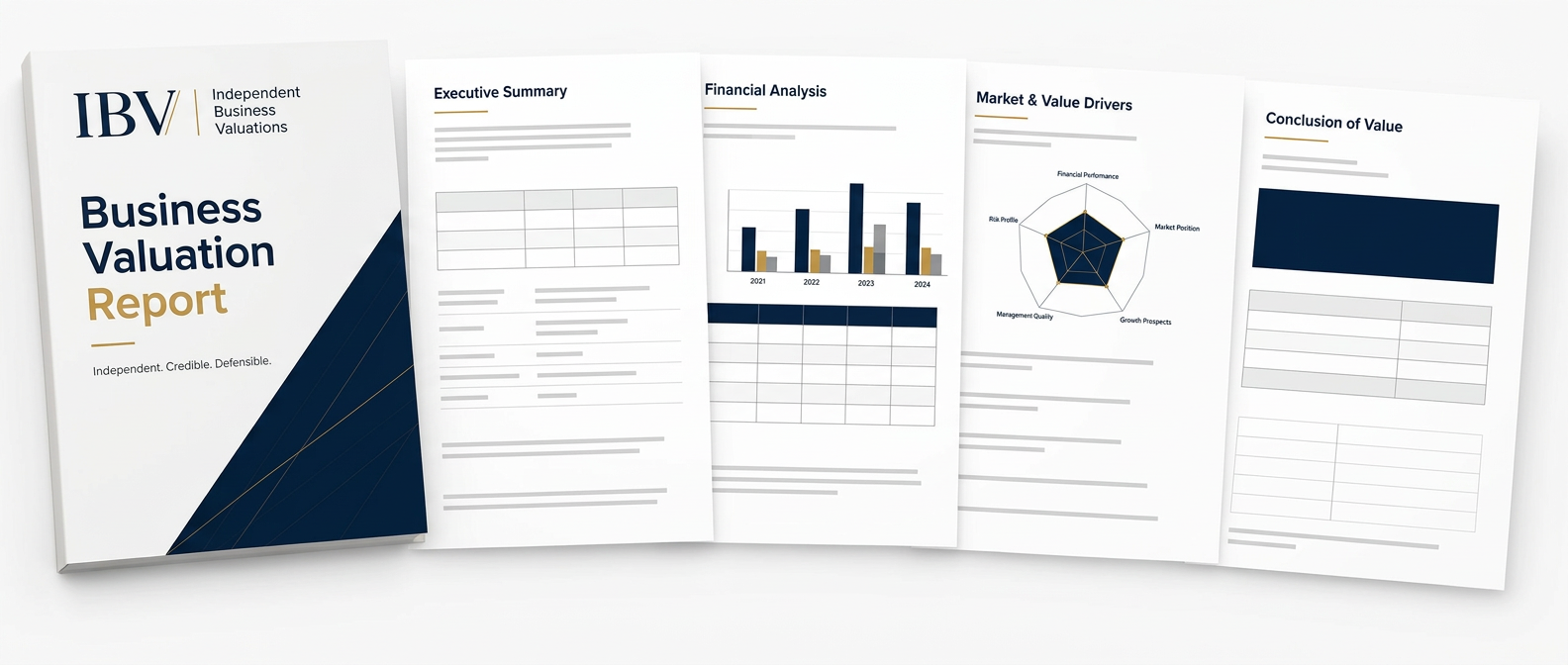
A clear, independent view of value — with the evidence behind it.
- Understand the conclusion — and what drives value.
- Gain an independent perspective. Move forward with confidence.
- Benchmark your business against industry performance.
- Identify strengths, risks and opportunities through SWOT analysis.
WHAT YOU GET IN A LIMITED SCOPE VALUATION REPORT
Inside your IBV™ report
Executive Summary
Conclusion of value · Method selected · Valuer qualifications
Detailed Report
Maintainable earnings · Cap rate / multiple · Premise of value
The Evidence Pack
SWOT analysis · Top Performers Report · RAVDA score
APES 225 voluntarily aligned. Report depth and supporting analysis follow your agreed package and engagement scope.
Free Valuation Call