

Key takeaways
Contractor status does not settle payroll tax.
Relevant contract provisions can deem payments wages even when a practitioner operates independently.
Exemptions require evidence.
General contractor exemptions and GP-specific relief have different conditions, dates and practitioner coverage.
Follow the money and the obligations.
Collection accounts, beneficial entitlement, agreements and actual operations must be examined together.
Queensland relief is not national allied-health relief.
Check each jurisdiction and distinguish GP wages from other practitioner payments.
Separate future costs from past exposure.
Explain recurring earnings adjustments and historical liabilities without double counting or making legal determinations.
Start with the business and the jurisdiction
A practice may employ clinicians, engage independent practitioners or supply rooms and administration through a service entity. Those operating descriptions help explain the economics, but none determines payroll tax liability. Identify the entities, places where services are performed, applicable financial years and arrangements being valued before normalising profit. Include related entities in the information request: grouping and interstate wages can affect the threshold analysis.
A valuation examines the financial consequences of supported assumptions. It is not a legal determination that an arrangement is taxable or exempt under the applicable rules. Seek advice from a suitably qualified payroll tax adviser, and distinguish written advice based on actual arrangements from an owner's understanding of an industry announcement.
Contractor status and relevant contracts are separate questions
An individual can operate an independent business yet fall within statutory contractor provisions. Revenue NSW explains that a relevant contract can deem the principal an employer, the contractor an employee and payments for work wages for payroll tax purposes. Its medical-centre ruling expressly includes physiotherapy practices and similar healthcare providers, not just GP clinics. Revenue NSW medical-centre contractor ruling
Start by asking whether ordinary employee wages or employment agency provisions apply. If they do not, examine the relevant contract provisions in the applicable jurisdiction. Only then assess exclusions, exemptions and payment treatment. An ABN, invoice, practitioner company or agreement stating “independent contractor” does not complete this exercise. Nor does the fact that a practitioner supplies clinical services to patients necessarily establish that no services are provided to the practice.
Distinguish contractor exemptions from practitioner relief
A contractor exemption generally depends on statutory conditions relating to the services or arrangement. Practitioner-specific relief instead concerns a defined category of wages, practitioner or medical business. They are not interchangeable. Neither should be assumed from a clinic's name or from relief granted to a neighbouring practice.
Queensland's contractor guidance describes nine exemptions and requires at least one to be satisfied. Examples concern services provided for limited days, services usually required for limited periods, and other specified circumstances. The tests have different subjects and counting rules: a practitioner working limited sessions is not automatically within an exemption. Evidence must address the particular test and year. Queensland contractor-exemption guidance
For valuation work, request the adviser’s exemption analysis, supporting attendance records and any required determination. Mark untested exemptions as unresolved assumptions rather than removing an expense as if eligibility were established. Conditions satisfied in one year may not remain satisfied after recruitment, expansion or a change in service delivery.

Signed
A clear valuation conclusion starts with an agreed purpose, relevant evidence and disclosed assumptions. The report identifies the interest valued and explains the reasoning behind its conclusion.
Reconstruct the money flow before drawing conclusions
Map who contracts with the patient, issues the invoice, receives each payment and has the right to the funds. Reconcile patient payments, Medicare receipts, health-fund collections and other payer receipts to bank accounts and practitioner settlements. Record the service fee, deductions, refunds and remittance timing. Distinguish beneficial entitlement from the bank account used for collection.
A clinic collecting billings and remitting a balance presents different factual questions from a practitioner collecting directly and paying an administration fee. But changing the payment destination alone is not a universal solution. Queensland's medical-centre ruling examines relevant contracts, payments and third-party payment arrangements; its application depends on the actual rights, obligations and payment facts. It also covers dental clinics, physiotherapy and similar providers. Read the operative provisions and examples, not just a summary of direct-payment scenarios. Queensland medical-centre payroll tax ruling
Supply the adviser with sample invoices, patient terms, practitioner agreements, bank statements and settlement reports. A diagram that traces a typical appointment from booking through collection and distribution is often more useful than a contract label. Ask whether operational practice matches the documents and identify any historical changes.
Queensland rulings are not blanket allied-health exemptions
Do not confuse the scope of a medical-centre ruling with the scope of a GP exemption. Queensland's official guidance states that wages paid by a medical practice to a GP, whether contractor or employee, are exempt from 1 December 2024. The earlier contracted-GP amnesty had separate eligibility and application conditions. That guidance does not establish a general exemption for physiotherapists, psychologists, occupational therapists or all businesses using a medical-practice structure. Queensland GP amnesty and exemption guidance
For a mixed clinic, separate GP and non-GP arrangements rather than applying one treatment to the entire practitioner ledger. Match advice to the relevant dates. An expired amnesty, a closed expression-of-interest process and a continuing statutory exemption address different periods and conditions.
Jurisdiction differences belong in the assumptions schedule
Harmonised terminology does not mean identical liability or relief. Check each relevant revenue authority, including local thresholds, grouping, nexus, exemptions, public rulings and commencement dates. Do not import Queensland's treatment into another state's forecast or use a national average tax rate in place of the actual analysis.
Victoria illustrates the distinction. Its medical-industry guidance describes an exemption from 1 July 2025 for GP medical-business wages related to fully-funded GP work, and expressly states that the exemption does not apply to non-medical GP businesses such as allied health professionals and dentists. This is not the same as Queensland's GP treatment. Victorian medical-industry payroll tax guidance
For a multi-state group, prepare an entity-and-jurisdiction matrix. Record the source date, adviser, practitioner category, periods covered and unresolved questions. Recheck rules at the valuation date; a current webpage does not establish the law that applied throughout an earlier review period.
Separate recurring cost from retrospective exposure
Ongoing payroll tax affects maintainable earnings or forecast cash flow where supported by the applicable facts and advice. Historical underpayments are a separate issue. Request returns, assessments, correspondence, voluntary disclosures, adviser calculations and evidence of any relief. Consider potential interest and penalties without inventing an assessment period or assuming relief will be granted.
The treatment also depends on the subject being valued. A share interest may carry exposure within the company; an asset transaction raises different liability-allocation and pricing questions for legal advisers. A sale contract indemnity does not by itself erase the economic risk. Any reliance on that protection requires consideration of its terms and the counterparty's ability to perform.
Avoid counting the same burden twice. A recurring expense adjustment, a historical liability deduction and a risk adjustment must each address a distinct consequence. Explain whether figures are before or after tax and how enterprise value reconciles to equity value. Where advice is incomplete, use clearly described scenarios rather than a falsely precise single liability.
Make the valuation adjustment traceable
Build a short assumptions schedule separating three questions: what the adviser believes is legally payable, which amount is already recorded in the accounts, and what adjustment the valuation actually makes. If current earnings already include the supported ongoing payroll tax cost, do not deduct that cost a second time when normalising profit. If historical arrears are recorded as a balance-sheet liability, identify that entry before introducing a separate equity deduction. A legal uncertainty is not resolved by giving the spreadsheet a more precise label.
Where advice remains outstanding, describe a base case and a clearly conditional alternative. Keep practitioner payments, affected periods and any rate assumptions visible so a reviewer can understand what changes between the cases. Do not calculate a liability by applying one state's headline rate to all gross patient billings: payment treatment, exclusions, thresholds, grouping and relief may change the legally relevant amount. Nor does describing a scenario as conservative make its inputs reliable.
After advice arrives, reconcile the revised analysis with the earlier financial statements and forecasts. Explain whether the change concerns continuing operating costs, a historical obligation, transition expenditure or residual uncertainty. These distinctions help owners negotiate and advisers review the result without mistaking a valuation model for a payroll tax assessment.
A practical review pack for owners
Before commissioning the valuation, assemble:
Use de-identified records where possible; patient-identifiable information is unnecessary for an initial enquiry. Ask the valuer to state what has been verified, what relies on specialist advice and what remains assumed. IBV voluntarily aligns with APES 225; it is not a CPA firm and does not offer expert-witness or court-appointed services. Agree the valuation purpose, interest and intended users before work begins.
For the broader practice economics, see our allied health valuation guide. Confirm the valuation purpose, intended users and information available before relying on a report.
An entity chart, operating locations and payroll tax registrations.
Practitioner agreements, variations, attendance records and actual working arrangements.
A money-flow diagram supported by collection and settlement reconciliations.
Annual returns, assessments and practitioner-payment schedules by financial year.
Written exemption or relief advice, including conditions and relevant periods.
A register of unresolved matters, responsible advisers and expected evidence.
Frequently asked questions
Does an ABN prevent payroll tax?
No. An ABN does not override employee, employment agency or relevant contract provisions.
Can an independent practitioner still generate taxable wages?
Yes. Statutory contractor rules can deem payments wages without resolving every other employment-law question.
Is the clinic’s retained service fee the taxable amount?
Not necessarily. Payment character and the applicable provisions require analysis; the accounting margin is not the statutory test.
Do direct patient payments guarantee no liability?
No. Review the jurisdiction, contractual obligations and payment facts, including applicable third-party payment provisions.
Does Queensland exempt all allied health practices?
No. Its medical-centre ruling includes allied health arrangements; GP relief is not blanket allied-health relief.
Is a short weekly roster automatically exempt?
No. Apply the particular exemption’s service and day-counting conditions across the relevant year.
Can a new agreement fix earlier periods?
Not automatically. Historical liability depends on the law and arrangements operating during those periods.
Should all uncertain tax be deducted from value?
No. Obtain specialist evidence, identify the valuation subject and explain scenarios and potential overlap before adjusting value.
Does a purchaser indemnity remove the exposure?
Not by itself. Legal enforceability, coverage and counterparty capacity require separate review.
What if the adviser has not finished reviewing liability?
Disclose the gap, state conditional assumptions and test supported alternatives; do not present a valuation assumption as clearance.
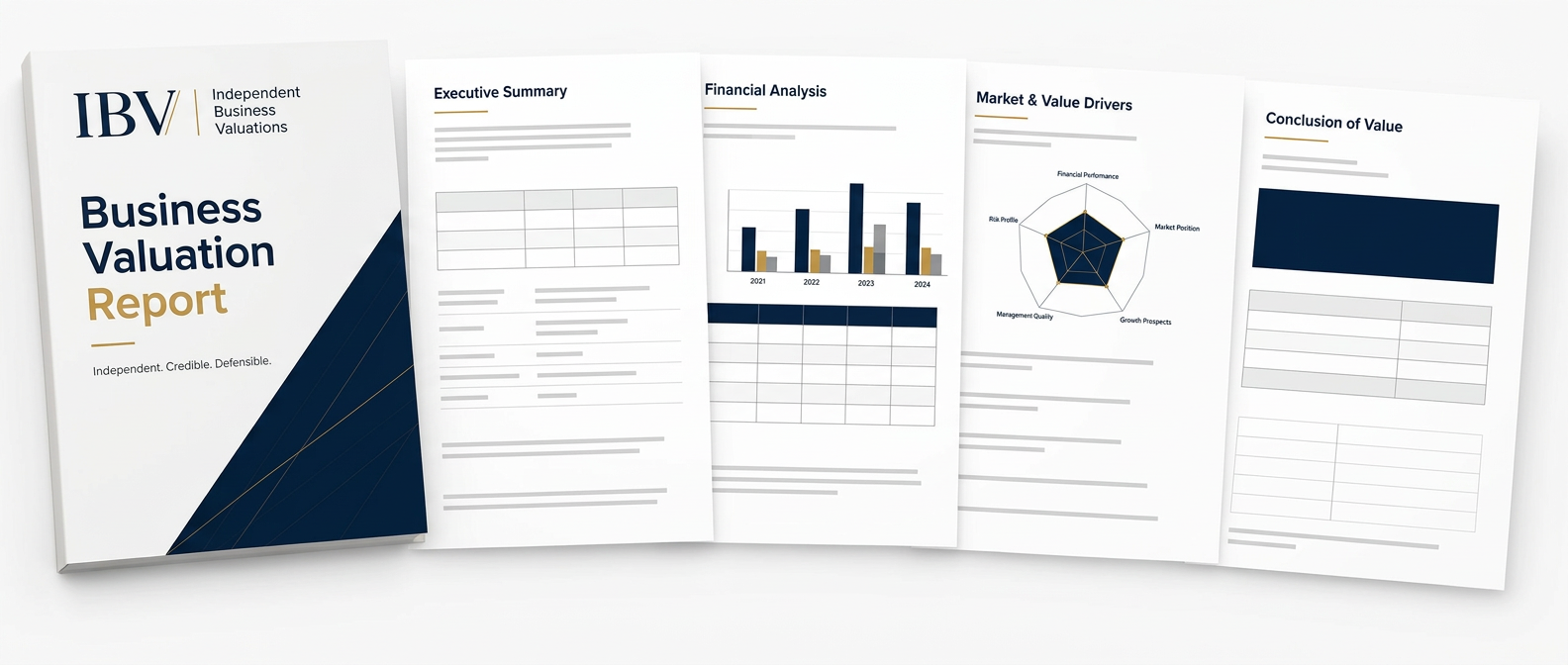
A clear, independent view of value — with the evidence behind it.
- Understand the conclusion — and what drives value.
- Gain an independent perspective. Move forward with confidence.
- Benchmark your business against industry performance.
- Identify strengths, risks and opportunities through SWOT analysis.
WHAT YOU GET IN A LIMITED SCOPE VALUATION REPORT
Inside your IBV™ report
Executive Summary
Conclusion of value · Method selected · Valuer qualifications
Detailed Report
Maintainable earnings · Cap rate / multiple · Premise of value
The Evidence Pack
SWOT analysis · Top Performers Report · RAVDA score
APES 225 voluntarily aligned. Report depth and supporting analysis follow your agreed package and engagement scope.
Free Valuation Call