

Key takeaways
Distinguish income tax consolidation from consolidated financial reporting
A group can prepare consolidated accounts without having the same membership or measurements for income tax consolidation, which is a separate statutory regime. Ask your tax adviser to confirm eligibility, the joining entity and joining time, and identify whether the valuation supports tax, accounting or commercial work.
Build an asset inventory for the exact joining time
Tax consolidation can require market values for particular assets, but does not simply give every asset a new tax cost equal to market value. Prepare an entity-level inventory, including relevant unrecorded rights and goodwill, and ask the adviser to identify the classifications and valuation inputs needed.
Reconcile the business valuation with the individual asset schedule
A whole-business earnings value and an individual asset schedule can include different cash, debt and operating assumptions, making direct comparisons misleading. Agree the valuation scope and reconcile specialist reports so customer benefits, property and other assets are neither omitted nor counted twice through overlapping valuations.
Trace internal balances before calculating statutory cost adjustments
Loans, distributions and other dealings around group entry can be obscured by accounting eliminations, yet remain relevant to the tax adviser’s calculation. Provide pre-entry ledgers and agreements, and do not adjust asset values merely to match a target total or assume purchase price equals the statutory amount.
Keep auditable market values separate from tax allocation results
Each asset value should identify its owner, measurement basis, joining time, method and supporting evidence so another reviewer can trace the conclusion. Maintain separate market, accounting and adviser-calculated tax amounts, because valuation evidence does not establish group eligibility, determine every adjustment or guarantee deductions from the allocation.
Distinguish commercial and tax consolidation
Combining a group’s accounts can conceal the entity-level assets and obligations needed for a consolidation instruction. Clarify whether the task concerns income-tax consolidation, financial reporting or a commercial reorganisation before commissioning values. Identify each joining entity, the relevant time and the required asset schedule. Reconcile business and specialist asset assessments so internal funding, shared resources and goodwill are not counted twice.
Reconcile the group information
Provide entity-level accounts, group reporting, ownership charts and intercompany schedules. Identify shared services, internal funding, intellectual property and assets held outside trading entities. Consolidated accounts can obscure where income and obligations sit legally, so the evidence needs to support the particular subjects being valued as well as the overall commercial picture presented in management reporting.
Avoid duplicated economic value
Internal revenues, loans and shared assets can create overlap when entities are assessed separately. The analysis should explain relevant eliminations and allocation assumptions, while keeping legal ownership visible. Synergies available only to the combined group should be distinguished from standalone entity performance where the purpose requires it, rather than being applied inconsistently across different parts of the same schedule.

Signed
A clear valuation conclusion starts with an agreed purpose, relevant evidence and disclosed assumptions. The report identifies the interest valued and explains the reasoning behind its conclusion.
Provide a reconciled valuation set
The deliverable can include entity or asset schedules with a reconciliation to the agreed group perimeter. It should explain methods, cross-dependencies, debt treatment and exclusions. This allows advisers to trace each conclusion to its intended use, while seeing whether the total represents a group assessment, the sum of separate interests or another specifically instructed valuation premise.
Keep statutory calculations separate
A general group valuation is not automatically a tax consolidation calculation or a complete accounting allocation. Your accountant must confirm applicable legislation, required measurements and any additional specialist work. For changes beyond consolidation, restructure valuation may be appropriate; separately identifiable assets may require goodwill and intangible valuation under a purpose-specific brief.
Specify tax consolidation rather than accounting aggregation
Income tax consolidation is a statutory regime for eligible groups, not simply the preparation of consolidated financial statements. Accounting control and tax group membership are different questions. A group can present consolidated accounts without the same entities or measurements applying for tax consolidation. Ask the tax adviser to confirm eligibility, the joining entity and the precise joining time.
The valuation brief should identify whether it supports tax cost setting, commercial restructuring or accounting acquisition analysis. An accounting purchase price allocation may be useful background, but it is not automatically the tax consolidation allocation. Differences in asset recognition, liability treatment, measurement date and statutory adjustments need an explicit bridge rather than a claim that one report covers every purpose.
Build the joining-time asset inventory
The ATO's consolidation material describes a cost-setting process involving the allocable cost amount and the assets brought into the group. Market valuation is relevant to allocating amounts among certain assets, but not every asset simply receives market value as its new tax cost. The adviser should classify assets and identify the required valuation inputs under current law.
Obtain a legal-entity asset register, not only a group balance sheet. Include relevant off-balance-sheet assets such as internally generated goodwill or identifiable intangible rights for adviser review. Record cash, receivables, depreciating assets, inventory, investments and contractual rights separately. A general business value cannot identify all of these amounts, and a residual goodwill calculation should not conceal omitted assets or unsupported classifications.
Reconcile enterprise value to the allocation perimeter
A whole-business earnings assessment can provide a reasonableness check on asset values, but its perimeter must match the statutory exercise. Identify which operating liabilities, working capital and non-operating assets are reflected. An enterprise value excluding cash and debt should not be compared directly with a gross asset schedule including both without explanation.
If separate specialist reports value property, equipment and intellectual property, reconcile their assumptions about use and continuing operations. Avoid valuing the same customer-related benefits through both goodwill and a separate intangible without a coherent allocation. Equally, do not omit a contractual asset merely because its income contributes to the earnings model. The adviser and valuer need an agreed inventory and reconciliation, with unresolved classifications visible.
Trace intragroup balances and statutory adjustments
Joining entities may have loans, management charges and other balances with entities already in the group. Consolidated accounting eliminations can obscure these legal positions. Supply pre-entry ledgers, loan terms, acquisition documents and a reconciliation of balances between counterparties. Identify transactions immediately before entry, including distributions, debt settlements and asset transfers.
The allocable cost amount is a statutory calculation, not a synonym for purchase price or total asset market value. The ATO reference material describes multiple steps and adjustments. Tax advisers must determine the treatment of liabilities, profits, distributions, losses and other relevant items. The valuer should not fill a gap in that calculation by adjusting asset values until they equal an expected total.
Deliver values that can be audited independently of tax workings
Prepare a schedule giving each asset identifier, legal owner, instructed basis, joining-time value, method and source evidence. Show which amounts came from specialist reports or management and where verification was limited. Reconcile asset values to the business assessment where appropriate, explaining any difference in measurement premise or perimeter.
Maintain separate columns for market values, adviser-calculated tax cost setting amounts and accounting recognition amounts. They may differ legitimately. Older consolidation manuals contain historical and transitional material, so their examples should be read with current legislation and advice rather than treated as universal formulas. A valuation does not confirm group eligibility, calculate every allocable cost adjustment or guarantee deductions arising from an allocation. Any later correction to liability or asset information should be referred back to the tax adviser.
Scope, fees and timing
See our fixed-fee valuation packages and confirm the scope and fee before commissioning work. Confirm the purpose, intended users, information requirements and inclusions in a written engagement before work begins. Calculated Value and Limited Scope delivery is 5–7 business days from complete financial information and a signed engagement. Full Conclusion timing is confirmed individually in the engagement letter. Specialist requirements or changes to the instruction may affect suitability and timing; confirm these before relying on an external deadline.
Sources and further reading
Frequently asked questions
Is tax consolidation the same as merging our businesses administratively?
No. Tax consolidation is a specific income tax regime for eligible wholly-owned groups that choose to consolidate. Combining bookkeeping, branding or management does not itself create a tax consolidated group or merge legal ownership. Tell us whether the instruction concerns commercial reorganisation, accounting or tax consolidation before valuation subjects are selected.
Source: ATO — Taxing wholly-owned corporate groups as single entities
Can all related companies join a tax consolidated group?
Common family ownership alone is not enough to assume eligibility. The ATO describes a regime for eligible wholly-owned groups with a head company, subject to detailed conditions. Your tax adviser should confirm membership and the relevant joining time. A group valuation neither elects consolidation nor determines which entities legally qualify.
Source: ATO — Taxing wholly-owned corporate groups as single entities
Do consolidated accounts provide enough information to value each entity?
Usually they need supporting entity-level records. Group accounts can eliminate internal balances and obscure which entity owns an asset or earns income. Provide separate accounts, ownership records and intercompany schedules so the analysis can trace value to each instructed subject without simply dividing a consolidated total among subsidiaries.
How do you avoid counting intercompany loans twice?
We need matching loan schedules and an explanation of internal funding arrangements. The treatment depends on whether the instruction values a group, individual entities or particular interests. Reconciliations should show relevant eliminations and debt adjustments, while retaining visibility of legal obligations rather than treating every internal balance as external group value.
Which date matters when an entity joins a tax consolidated group?
Ask your tax adviser to confirm the joining time and the measurements required for the cost-setting process. A financial year-end business value may not answer an entry-date asset question. Provide records around the actual joining time and identify any transactions or distributions that change assets or liabilities immediately beforehand.
Source: ATO — Consolidation cost setting on formation and entry
Is a group valuation a complete allocable cost amount calculation?
No. A valuation may provide inputs to the tax consolidation cost-setting process, but the statutory calculation involves additional information and rules. Your accountant should specify the required asset measurements and handle the tax calculation. Agree separately whether asset allocation schedules or specialist valuations form part of the engagement.
Source: ATO — Consolidation cost setting on formation and entry
Can you separate goodwill from identifiable assets for consolidation?
That can be considered where the instruction requires it, but a whole-business conclusion does not automatically provide a complete allocation. Identify intellectual property, contracts, equipment and property held across the group. Some assets may need specialist evidence, and your adviser should confirm the valuation basis and statutory purpose before allocation work begins.
Source: ATO — Consolidation cost setting on formation and entry
Should savings from combining the entities increase every entity’s value?
Not automatically. Shared savings and synergies need to be linked to the instructed valuation premise and supported by evidence. Standalone entity performance can differ from the combined group’s prospects. The report should explain where benefits are recognised so the same saving is not capitalised repeatedly across several entity valuations.
Does tax consolidation remove the need to identify separate legal owners?
No. Treating a consolidated group as a single entity for income tax purposes is not the same as transferring every asset into one legal company. Valuation instructions still need a clear entity and asset map. Your lawyers and accountants should confirm legal ownership, contracts and other obligations separately from the income tax treatment.
Source: ATO — Taxing wholly-owned corporate groups as single entities
How should we scope a multi-entity consolidation assignment?
Send an entity chart, the proposed group perimeter, joining dates and a list of required outputs. We agree a Fixed Professional Fee upfront, including any specialist exclusions. Standard delivery is 5–7 business days after complete records and a signed engagement; timing depends particularly on the asset schedules required. This 5–7 business-day timetable applies to Calculated Value and Limited Scope only; Full Conclusion delivery is confirmed individually in the engagement letter.
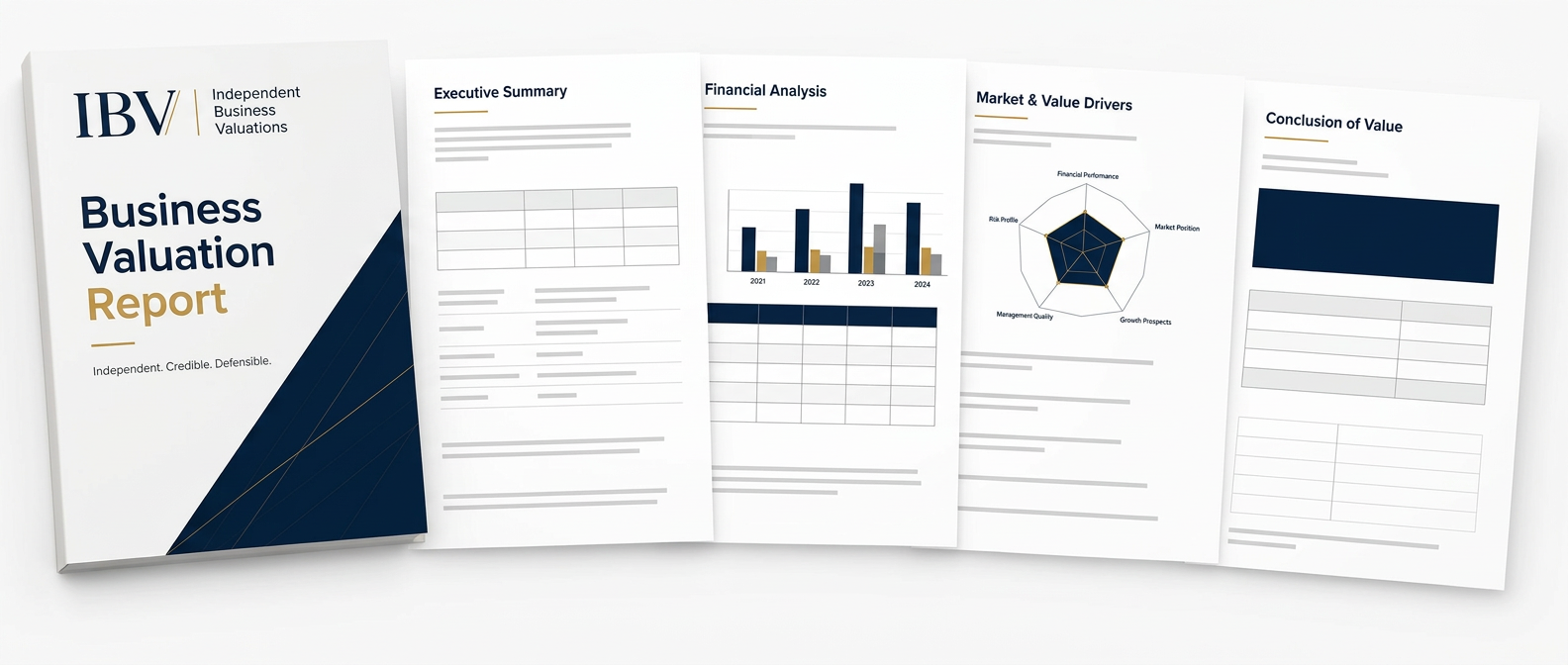
A clear, independent view of value — with the evidence behind it.
- Understand the conclusion — and what drives value.
- Gain an independent perspective. Move forward with confidence.
- Benchmark your business against industry performance.
- Identify strengths, risks and opportunities through SWOT analysis.
WHAT YOU GET IN A LIMITED SCOPE VALUATION REPORT
Inside your IBV™ report
Executive Summary
Conclusion of value · Method selected · Valuer qualifications
Detailed Report
Maintainable earnings · Cap rate / multiple · Premise of value
The Evidence Pack
SWOT analysis · Top Performers Report · RAVDA score
APES 225 voluntarily aligned. Report depth and supporting analysis follow your agreed package and engagement scope.
Free Valuation Call