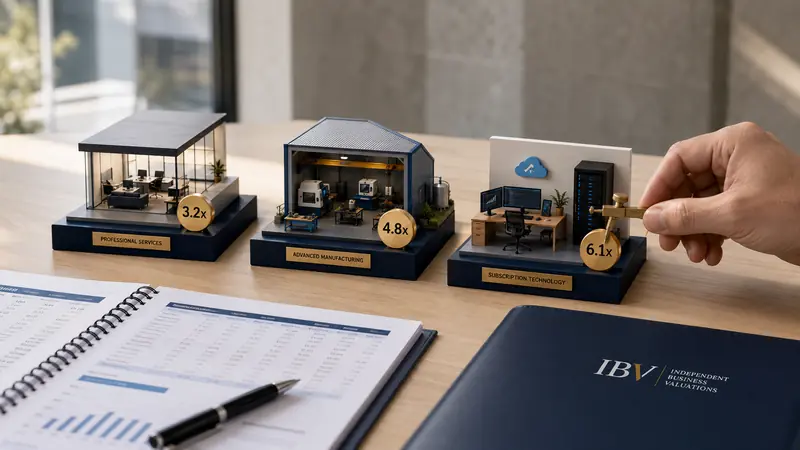

Credentials you can check. Reasoning you can follow.
A specialist engagement should give you more than a number. Know who is responsible, what work is agreed and how the report can be used.
Know who is valuing your business
Your valuation is led by Dr Patrick Hillenbrand, AVI Certified Business Valuer. The Certified Business Valuer designation is issued by the Australian Valuers Institute; it is not a universal government licence or a claim of Chartered Accountant status.
Independence from the preferred outcome
The IBV™ Independence Guarantee means no commissions, no hourly billing, no fee linked to the value concluded and no interest in buying or selling your business. We also assess conflicts for the particular engagement: fixed fees alone establish neither independence nor quality.
A report with a defined purpose
The report identifies what is valued, at which date, on what basis and for whose use. It explains the evidence, methods, assumptions and limitations. IBV voluntarily aligns its process and reporting with relevant APES 225 principles; that is distinct from membership-based mandatory obligations.
The useful test of expertise: what changes your decision?
A business valuation expert should be able to explain how your records, ownership rights and commercial risks affect the value—not simply attach a multiple to profit. Choose a business valuation specialist whose agreed work answers the question you actually face.
Selling or buying? Test the earnings behind the price.
Ask how owner remuneration, one-off expenses, customer concentration and transferable relationships will be assessed. Check whether the conclusion concerns the operating business or equity after debt and surplus assets. A valuation informs negotiation; it does not guarantee a sale price or replace due diligence.
Buying out an owner? Define the interest first.
A percentage of whole-company value is not automatically the value of a particular shareholding. Share rights, transfer restrictions and the valuation provisions in an agreement can change the instructions. Your lawyer clarifies legal rights; IBV assesses their valuation implications within the agreed scope.
Tax or a transfer? Confirm the date and intended use.
Tell us which business interest is involved and which valuation question your tax adviser has identified. The evidence must relate to the relevant date, including for a retrospective valuation. A valuation does not determine tax eligibility, and neither certification nor a report automatically guarantees ATO acceptance.
Business valuation expertise is not expert-witness work.
Here, “business valuation expert” describes specialist valuation knowledge—not an offer to give expert evidence in court. IBV does not accept expert-witness or court-appointed valuations. Private shareholder negotiations and non-litigious family law negotiations, voluntary mediation and settlement planning may be supported within an agreed purpose and identified-user restrictions.

Signed
A clear valuation conclusion starts with an agreed purpose, relevant evidence and disclosed assumptions. The report identifies the interest valued and explains the reasoning behind its conclusion.
Leave the first conversation knowing what to commission.
Bring the purpose, ownership interest, valuation date, intended users and any deadline. We will discuss the available records, whether we can accept the work and the appropriate engagement. Your written Engagement Letter sets out scope, permitted reliance, the Fixed Professional Fee and timing. You do not need to choose a package before talking to us.
Valuing an owner-operated or family business?
Owner replacement costs, transferable customer relationships, leases and working capital can matter more than turnover. Our small-business service explains what we assess and how to prepare.
Sources and further reading
For the broader explanation of specialist work, read what a business valuation specialist does.
Frequently asked questions
What should I expect from a business valuation expert?
A defined valuation question and an explanation of the evidence behind the conclusion. Ask who performs and signs the work, how earnings and risk are assessed, which interest is valued and what the report leaves outside scope. IBV’s service is independent business valuation analysis—not expert-witness or court-appointed work. Credentials support your checks but do not guarantee a particular value or recipient acceptance.
Is a business valuation expert different from a certified business valuer?
“Expert” and “specialist” describe claimed knowledge or focus; neither word by itself verifies a professional designation. A Certified Business Valuer credential should be checked with its issuer. Dr Patrick Hillenbrand holds the designation issued by the Australian Valuers Institute. Consider the person’s relevant experience, independence, agreed work and reporting as well as their credential; Australia has no single universal government licence for business valuers generally.
When should I engage a business valuation specialist?
When a decision needs a documented value for a defined business or ownership interest, rather than an unexplained figure. Sales, buyouts, succession, tax and restructures can require different instructions. Tell us the purpose, valuation date and intended users so we can determine whether IBV can accept the work and which engagement is suitable.
Can my accountant work with IBV on the valuation?
Yes. Your accountant can help explain the records and specify the tax question; your lawyer can clarify ownership rights and agreements. IBV undertakes the agreed valuation analysis. Those roles complement each other: a valuation does not replace tax or legal advice, and professional titles alone do not establish the work needed for a particular purpose.
Will a buyer, lender or the ATO automatically accept the report?
No. Suitability depends on the agreed purpose, basis, scope and permitted users, and the recipient may have its own requirements. Identify those requirements before engagement. A Calculated Value is for your own preliminary planning only, not third-party reliance. Neither a credential nor APES 225 alignment guarantees recipient acceptance.
Do you provide court-appointed or expert-witness valuations?
No. IBV provides ATO valuations, valuation review support and valuations for private shareholder negotiations. Family law work is for non-litigious negotiations, voluntary mediation and settlement planning, subject to agreed users and restrictions. IBV does not accept expert-witness or court-appointed engagements.
What should I bring to the first conversation?
An outline of the business and ownership structure, why the value is needed, who will use the report, the relevant date and any deadline. Explain which accounts and management records are available. You do not need to select a package first: we discuss scope and information requirements before agreeing a written Fixed Professional Fee.
What does the IBV™ Independence Guarantee change about a specialist valuation?
It removes the commercial reasons a value might be skewed. IBV takes no commissions, does not buy, sell or broker businesses, bills no hourly fees and never links its fee to the value it concludes. Conflicts are still assessed for your particular engagement, because fixed fees alone establish neither independence nor quality.
What should the Engagement Letter record before work begins?
The business or ownership interest being valued, the valuation date, the purpose, the permitted users and basis of reliance, the agreed scope, the Fixed Professional Fee and the timing. That written engagement, not a verbal indication, defines what you are commissioning and how the report may be used.
Is a percentage of company value the same as the value of my shares?
Not automatically. A percentage of whole-company value is not the same as the value of a particular shareholding, because share rights, transfer restrictions and the valuation provisions in a shareholders’ agreement can change the answer. Your lawyer clarifies those legal rights; IBV assesses their valuation implications within the agreed scope.
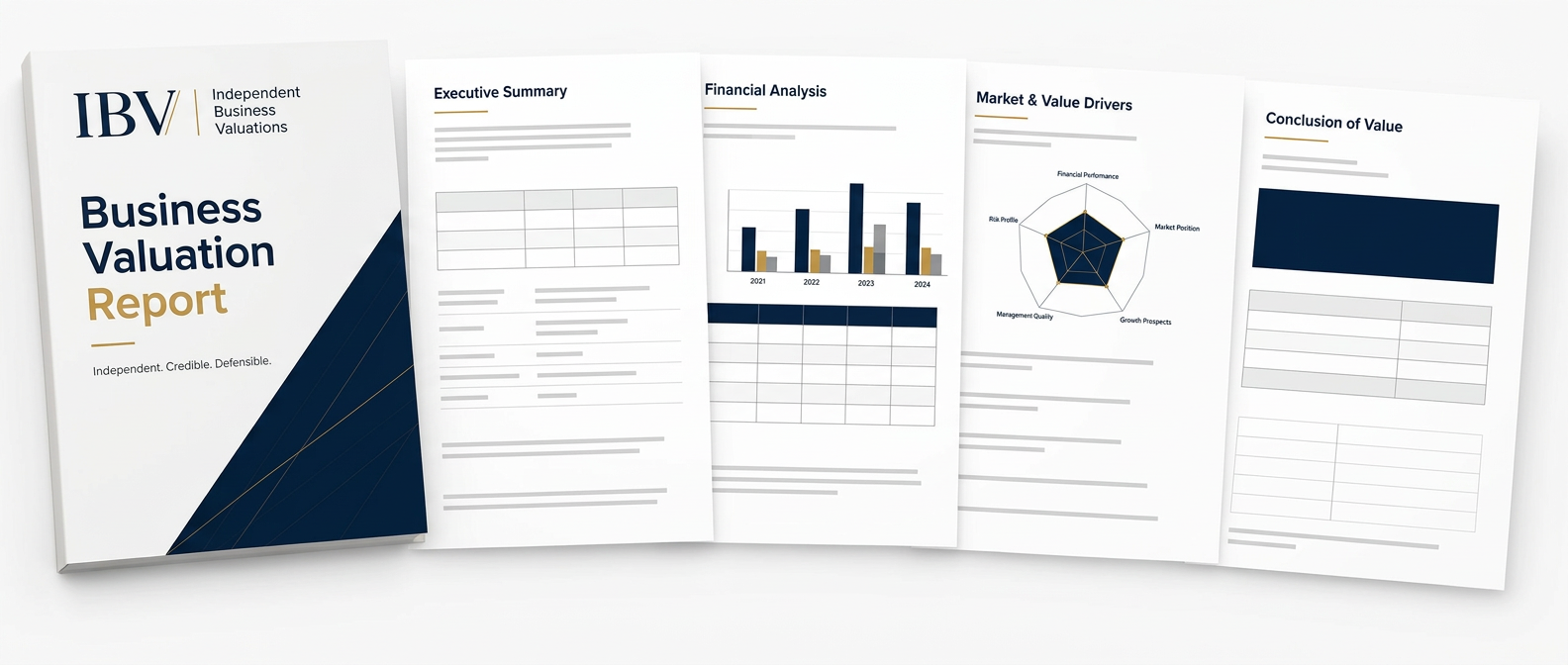
A clear, independent view of value — with the evidence behind it.
- Understand the conclusion — and what drives value.
- Gain an independent perspective. Move forward with confidence.
- Benchmark your business against industry performance.
- Identify strengths, risks and opportunities through SWOT analysis.
WHAT YOU GET IN A LIMITED SCOPE VALUATION REPORT
Inside your IBV™ report
Executive Summary
Conclusion of value · Method selected · Valuer qualifications
Detailed Report
Maintainable earnings · Cap rate / multiple · Premise of value
The Evidence Pack
SWOT analysis · Top Performers Report · RAVDA score
APES 225 voluntarily aligned. Report depth and supporting analysis follow your agreed package and engagement scope.
Free Valuation Call