
Key takeaways
Practice and property are separate subjects
Define the assets included and normalise occupancy costs before combining operating-business and real-estate conclusions.
Owner clinical work is not free profit
Allow commercial replacement costs for consultations, surgery, management and clinical-director duties before assessing ownership returns.
Approvals are jurisdiction-specific
South Australia's premises reforms commenced on 1 July 2026. Check responsible-person eligibility, NSW hospital ownership and superintendent requirements, and other approvals even where the veterinary board does not license facilities.
Retention supports transferable goodwill
Assess staff capacity, client activity and referral continuity without guaranteeing future revenue. Client-record transfer and use depend on applicable privacy exemptions, professional confidentiality and the transaction structure.
Equipment and stock need operational scrutiny
Review maintenance, replacement funding, finance, expiry and drug controls; reconcile operating assets and inventory to avoid double counting.
Start with the practice being valued
A veterinary practice is more than a client list and a room full of equipment. Its sustainable earnings depend on the clinical team, service mix, facilities, systems and the ability to continue caring for animals after an ownership change. A valuation should explain which of those strengths belong to the business and which depend on a departing owner.
Define the subject interest, purpose and valuation date before comparing financial results. A companion-animal clinic, mixed practice, referral service and mobile operation have different staffing, equipment and premises needs. Identify whether the assessment concerns shares or business assets and which debt, working capital and liabilities are included. Turnover alone cannot resolve those differences.
Separate the operating practice from the property
Where the owner also owns the building, distinguish the veterinary business from the real estate. The practice needs an appropriate occupancy charge to reveal its underlying operating earnings. A property held in another entity should not disappear from the analysis merely because the same family controls both entities.
Use supportable market rent assumptions and appropriate property advice where needed. State whether the property is excluded, separately valued or included through another defined interest. Do not capitalise rent-free practice profits and then add the full property value without reconciliation; that can attribute the same occupancy benefit twice. Property finance and operating-business finance also need clear allocation.
For leased premises, examine remaining term, options, rent reviews, assignment and change-of-control provisions, permitted use, maintenance obligations and make-good exposure. Assess whether the location supports the clinical service model and whether expansion is genuinely available. The government’s Australian Government ownership-change guidance identifies lease, permit and licence transfers as ownership-change tasks; obtain legal advice on the actual documents and consents.
Replace the owner’s clinical and leadership work
Owner clinical earnings are not all business profit. Identify consultation sessions, surgery, emergency availability, management hours and clinical supervision supplied by each working owner. Deduct a commercial replacement cost for those duties, including relevant employment on-costs. If the accounts contain an owner wage, reconcile it to the work performed rather than automatically adding it back.
Clinical-director replacement is a separate question from replacing ordinary consulting hours. The owner may lead protocols, mentor junior veterinarians, handle difficult cases, supervise controlled-drug processes and maintain referral relationships. One replacement employee may not be able to cover every role. Assess recruitment costs, realistic availability and whether the duties need to be divided across several people.
A buyer who intends to work clinically still provides labour. Separate the expected remuneration for that labour from the return on invested capital. Otherwise, an owner-operated practice can appear highly profitable simply because professional work has been supplied cheaply or without a recorded salary. Explain assumptions about handover periods and any ongoing seller employment rather than treating transition assistance as permanent capacity.

Signed
A clear valuation conclusion starts with an agreed purpose, relevant evidence and disclosed assumptions. The report identifies the interest valued and explains the reasoning behind its conclusion.
Registrations and premises requirements vary by state
Review practitioner registrations, conditions and the professional roles required for the services offered. Premises approvals are not uniform nationally. In NSW, the Veterinary Practitioners Board’s NSW veterinary hospital licensing guidance explains hospital licensing and procedures requiring the relevant licensed premises, with specified exceptions. The applicable licence scope matters; a business name is not evidence of authorisation for every procedure.
Victoria illustrates why NSW rules cannot simply be copied nationwide. Its Board’s Victorian veterinary facilities guidance states that it does not approve or license veterinary facilities or equipment, while practitioners should satisfy themselves that applicable approvals and licensing are current. Check the relevant state or territory framework, council permissions and any equipment-specific requirements for the actual operation.
Other approvals still apply in Victoria even though its Veterinary Board does not license premises or equipment. Relevant requirements may include local government, radiation safety and medicines and poisons controls. Veterinary X-ray sources can require a radiation management licence for the legal entity possessing them, while individual operators may require radiation use licences, subject to applicable exemptions. Victorian Department of Health veterinary radiation guidance
A sale does not remove these obligations. Identify required appointments, notifications, approvals or applications before assuming seamless trading. Where the seller is the responsible clinical leader or hospital superintendent, confirm how that responsibility will be discharged after completion. Regulatory and legal advisers should resolve uncertainties; the valuation should disclose assumptions rather than imply that a financial report certifies compliance.
South Australian veterinary premises reforms
From 1 July 2026, South Australia's Veterinary Services Act 2023 introduced a wider veterinary premises registration framework. Categories include clinics, consulting rooms, veterinary mobile clinics, hospitals and occasional premises, subject to exemptions and transitional arrangements. The rules distinguish provision of veterinary services from carrying on a veterinary business; do not assume an exception for an individual service exempts the business premises. South Australian premises registration and Veterinary Premises Standard explain the scope.
Registered premises must have a designated responsible person. Where premises are owned or occupied by an entity, its nominated responsible person must be a veterinarian with primary registration and principal residence in South Australia. The Board describes a veterinarian as best practice in other cases; do not apply the entity nomination rule indiscriminately. Assess registration status, required notifications or applications, compliance costs and availability of qualified personnel before assuming uninterrupted operations after acquisition. South Australian responsible-person requirements
NSW veterinary hospital ownership
NSW veterinary hospital licensing involves ownership eligibility as well as premises suitability. The Veterinary Practice Act 2003 generally requires a registered veterinary practitioner or a qualifying corporation or firm in which veterinary practitioners have a controlling interest, subject to statutory exceptions. A registered veterinary practitioner must be nominated as hospital superintendent. Verify the purchaser's proposed ownership structure and continuing superintendent availability before assuming hospital operations can continue on the same basis. NSW veterinary hospital licence requirements and Veterinary Practice Act 2003.
Test staff retention and client continuity
Review veterinarian, nurse and support-staff turnover, vacancies, roster coverage, overtime and locum expenditure. A practice with full appointment books may still lack sustainable capacity if its team is exhausted or dependent on repeated temporary cover. Forecasts should allow for leave, continuing education, supervision and non-billable clinical administration.
Understand why clients return. Local convenience, consistent care and a capable team may support transferable goodwill. Relationships centred entirely on one departing veterinarian need different consideration. Examine active-client and repeat-visit information, not just the total number of historic records. Species mix, procedure mix and referrals also help explain whether recent revenue reflects recurring demand or exceptional cases.
Retention plans require evidence. Employment contracts and seller introductions can support continuity, but neither guarantees that staff or clients will stay. Consider realistic replacement lead times, communication arrangements and operational documentation. Review confidentiality, record-transfer and privacy requirements with advisers before treating a clinical database as an unrestricted marketing asset. Veterinary client and clinical records may contain personal information. Privacy Act obligations depend on the practice's circumstances and applicable exceptions, including the small-business exemption; veterinary businesses should not automatically be equated with human healthcare practices. Professional confidentiality and recordkeeping duties may apply independently of that Act.
Requirements differ by jurisdiction and transaction structure. Use aggregated information where practicable and do not assume unrestricted transfer or use of client records. Victorian Board guidance addresses confidentiality and record transfer and recommends obtaining animal-owner consent when referring an animal and transferring its records to another practice; this is not a blanket assertion that every ownership transaction requires the same consent process. Victorian veterinary medical records and OAIC selling-a-business guidance.
Inspect drug handling, inventory and clinical systems
Medicine stock needs more than a balance-sheet figure. Review purchasing controls, storage, expiry monitoring, access permissions, dispensing records, wastage and stock reconciliations. Controlled medicines require particular attention to the applicable jurisdiction’s current rules. The Therapeutic Goods Administration — Poisons Standard classifies medicines and poisons into schedules, given legal effect through applicable state and territory legislation. That national scheduling framework does not replace jurisdictional requirements for possession, storage, prescribing, administration, supply and recordkeeping. Check the instrument and operational rules applying at the valuation date.
Identify expired, damaged, obsolete or slow-moving inventory and explain the valuation basis used. A physical count should reconcile to the records, with appropriate adjustments for consignment goods and stock not owned by the practice. Separate normal inventory requirements from excessive purchasing that may not translate into future services or cash receipts.
Review clinical record systems, backups, cybersecurity, complaints and insurance notifications alongside medicine controls. Weak documentation can create remediation costs and operational exposure even where accounting margins look strong. Seek specialist advice for identified concerns and distinguish known liabilities from risks that cannot yet be reliably quantified. A clean-looking profit statement is not a substitute for clinical due diligence.
Equipment requires maintenance and replacement funding
Prepare an equipment register showing ownership, finance, age, service history, condition and expected replacement needs. Imaging, dental, anaesthetic, laboratory and sterilisation equipment can support revenue but also create servicing, calibration and downtime costs. Confirm which assets are leased, financed, supplier-owned or subject to continuing consumables commitments.
Accounting depreciation is not necessarily the cash needed to maintain clinical capacity. Deferred maintenance can temporarily flatter profit while increasing future expenditure. Review service records and obtain technical assessments where material. Replacement forecasts should consider installation, training, software, facilities requirements and disruption, not just the catalogue price of a new machine.
Avoid counting essential operating equipment twice. An earnings-based valuation generally assumes access to the operating assets required to generate those earnings, subject to the method and transaction basis. Surplus assets may warrant separate treatment, while financed assets require appropriate debt reconciliation. State whether stock and working capital are included or settled separately so the conclusion can be compared meaningfully with an offer.
Bring the evidence into a transparent conclusion
Review several years of accounts, monthly results, service-line revenue, payroll, owner duties, staff records, the lease, approvals, equipment and inventory schedules. Normalise unusual income and expenses only where the adjustment is supportable. One-off locum expenditure may need adjustment, but persistent vacancy cover is not automatically exceptional.
Select methods consistent with earnings quality, available forecasts and the defined interest. This page makes no claim about a published veterinary-practice multiple or a standard sector price. Any comparison requires evidence about the transaction, assets included, lease, labour normalisation and financing rather than an unexplained industry rule.
IBV voluntarily aligns with APES 225 and is not bound by it as a mandatory member standard. IBV does not offer expert-witness or court-appointed engagements. Agree the non-litigious purpose, intended users and information requirements before work begins, and keep property, legal, employment and clinical-compliance advice distinct from the business valuation conclusion.
To distinguish owner labour from ownership returns, see our normalised earnings guide. Confirm the valuation purpose, intended users and information available before relying on a report.
Sources and further reading
Check the rules and source versions relevant to the valuation date and jurisdiction. Regulatory references explain the framework; they do not establish approvals, transferability or the value of any particular business.
Australian Government business guidance — Government ownership-change guidance identifies lease, permit and licence transfer tasks.
Veterinary Practitioners Board of NSW — NSW Board explains veterinary hospital licensing and relevant procedures and exceptions.
Veterinary Practitioners Registration Board of Victoria — Victorian Board does not approve/license facilities or equipment and expects practitioners to check applicable approvals.
Therapeutic Goods Administration — Poisons Standard — National scheduling classifications receive legal effect through applicable state and territory legislation; local operational medicine controls still apply.
South Australian Veterinary Services Regulatory Board — Premises registration — Premises categories, registration and continuing hospital registrations.
South Australian Veterinary Premises Standard — Registration scope, exceptions, standards and transition requirements.
South Australian responsible-person requirements — Entity nomination requires primary veterinary registration and South Australian principal residence.
NSW veterinary hospital licence requirements — Applicant eligibility and registered hospital superintendent.
NSW Veterinary Practice Act 2003 — Statutory hospital-licensing eligibility and exceptions.
Victorian Department of Health — Veterinary radiation — Radiation management and individual use-licensing requirements, subject to exemptions.
Victorian Veterinary Board — Medical records — Professional confidentiality, recordkeeping and record-transfer guidance.
OAIC — Selling a business — Protect personal information during due diligence and consider de-identification where the Privacy Act applies.
OAIC — Small business — Small-business exemption and exceptions; assess the actual practice rather than assume human-health-provider coverage.
Frequently asked questions
Does the practice valuation include the building?
Only if the defined subject includes the property interest. Otherwise assess the practice with an appropriate occupancy cost and obtain separate property advice where needed, reconciling any combined conclusion.
Can all owner remuneration be added back?
No. Replace the owner’s clinical and management duties at a commercial cost before identifying residual business earnings. Reconcile existing remuneration to the actual work rather than treating every payment as discretionary.
Why cost clinical-director replacement separately?
The role may include supervision, protocols, difficult cases, drug governance and team leadership beyond consulting hours. Replacing it may require additional senior capacity or several people, not one ordinary clinical appointment.
Are veterinary premises licensed the same way nationwide?
No. NSW hospital licensing, South Australian premises registration and Queensland premises approvals have different requirements. Victoria’s Veterinary Board does not license facilities or equipment, but other approvals still apply, including local government, radiation safety and medicines and poisons requirements. Veterinary radiation sources can require management licences and individual use licences, subject to exemptions. Check the actual jurisdiction and services rather than importing another state's rules.
Source: Victorian Department of Health — Veterinary radiation
How does a short lease affect the assessment?
Review options, assignment, permitted use, relocation feasibility and likely disruption. A short term is not an automatic discount, but unresolved occupancy continuity can change forecasts, risk and investment requirements.
Does a large client database prove goodwill?
No. Review active clients, repeat visits, service history and relationships with the team. Historic records may contain inactive accounts, and their use or transfer remains subject to applicable privacy and professional requirements.
How is medicine inventory assessed?
Reconcile a physical count to ownership and accounting records, then consider expiry, condition and realistic use. Review controlled-drug storage and recording under current jurisdictional requirements rather than assuming all stock is saleable.
Why look beyond accounting depreciation?
Depreciation may not match the cash needed to maintain clinical capacity. Review condition, service history and replacement timing, including installation, training, downtime and finance obligations.
Can equipment value be added to an earnings valuation?
Not automatically. Essential operating assets may already support the earnings-based conclusion. Explain the valuation basis, identify surplus assets and reconcile finance, inventory and working capital so nothing is counted twice.
Does IBV publish a standard veterinary practice multiple?
This draft makes no published-multiple claim. A defensible comparison needs evidence about earnings normalisation, assets included, lease, workforce, transaction terms and the business being valued, not an unexplained sector rule.
What changed for South Australian veterinary premises in July 2026?
From 1 July 2026, the Veterinary Services Act 2023 introduced a wider premises registration framework including clinics, consulting rooms and veterinary mobile clinics, subject to exemptions and transitional arrangements. Registered premises need a responsible person. Where an entity owns or occupies the premises, its nominee must be a veterinarian with primary registration and principal residence in South Australia. Check registration status, required notifications or applications, costs and qualified personnel before assuming uninterrupted operations; do not apply the entity nomination rule to every ownership arrangement.
Source: South Australian Veterinary Services Regulatory Board — Responsible person
Can any purchaser hold a NSW veterinary hospital licence?
Not automatically. Eligibility generally requires a registered veterinary practitioner or a qualifying corporation or firm in which veterinary practitioners have a controlling interest, subject to statutory exceptions. A registered veterinary practitioner must also be nominated as hospital superintendent. Verify the proposed ownership structure and superintendent arrangements with advisers and the Board before assuming continuity; NSW's hospital eligibility test is not a national ownership rule.
Can veterinary client records be transferred or used freely after a sale?
No. Privacy Act coverage depends on the practice's circumstances and applicable exceptions, including the small-business exemption; veterinary businesses should not automatically be equated with human healthcare practices. Professional confidentiality and recordkeeping duties may apply independently. Use aggregated information where practicable. Victorian guidance recommends animal-owner consent when referring an animal and transferring its records to another practice, not one identical consent rule for every acquisition. Obtain advice on the jurisdiction and transaction structure before disclosing or using identifiable records.
Source: OAIC — Selling a business
A clear, independent view of value — with the evidence behind it.
- Understand the conclusion — and what drives value.
- Gain an independent perspective. Move forward with confidence.
- Benchmark your business against industry performance.
- Identify strengths, risks and opportunities through SWOT analysis.
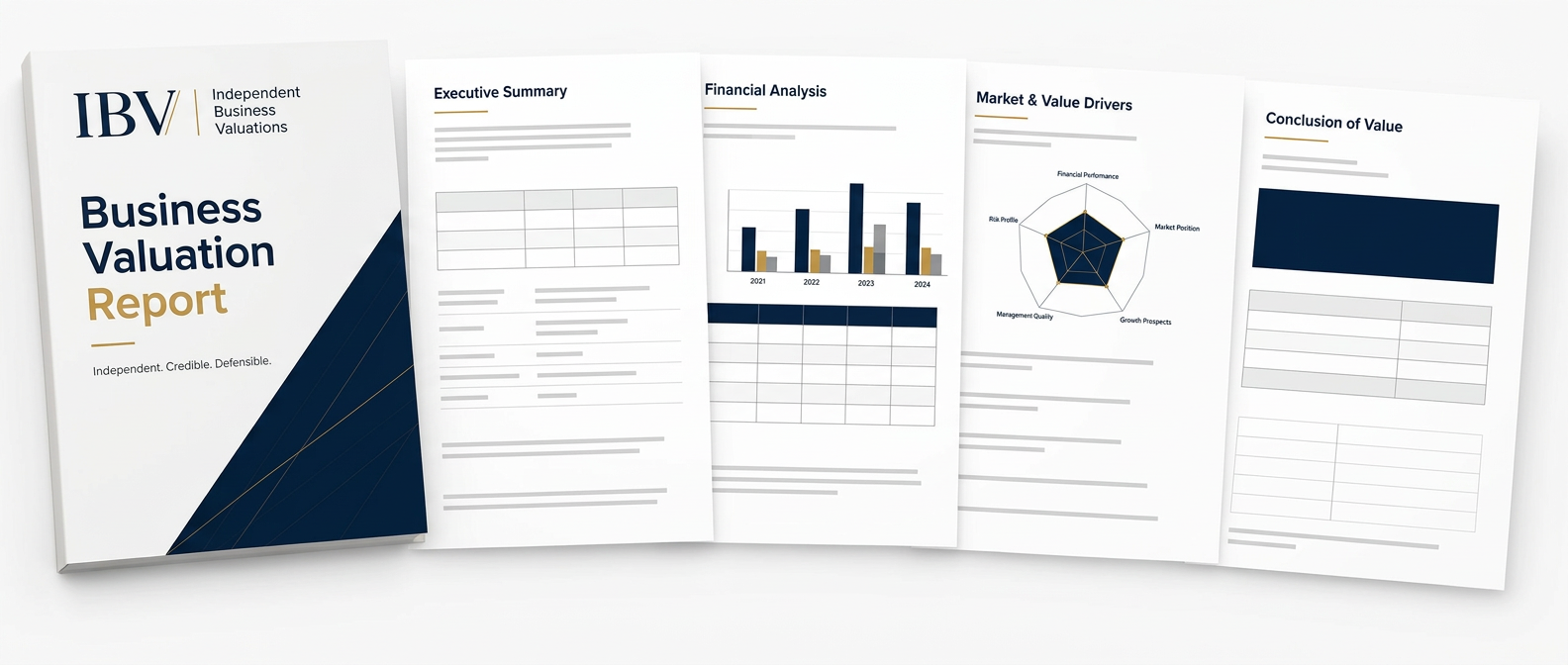
WHAT YOU GET IN A LIMITED SCOPE VALUATION REPORT
Inside your IBV™ report
Executive Summary
Conclusion of value · Method selected · Valuer qualifications
Detailed Report
Maintainable earnings · Cap rate / multiple · Premise of value
The Evidence Pack
SWOT analysis · Top Performers Report · RAVDA score
APES 225 voluntarily aligned. Report depth and supporting analysis follow your agreed package and engagement scope.
Free Valuation Call