

Key takeaways
Identify the precise valuation issue the ATO questions
An ATO challenge may concern a particular asset, forecast, debt balance or comparison rather than every part of the valuation. Ask your tax adviser to separate tax interpretation from valuation questions, then prepare an issue list linking each concern to the evidence and analysis needed for a response.
Check the original calculations before defending the result
A reasonable looking final figure can still depend on unsupported inputs or calculations that differ from the issued report. Obtain the original model and request a correction log separating errors, new evidence and changed judgement, allowing the independent conclusion to change if the records no longer support it.
Use comparisons that fit the original valuation date
Prices from other businesses only help when differences in timing, size, rights and financial measures are understood, and later market conditions should not be imported into an earlier assessment. Ask for the selection criteria and supported adjustments, distinguishing newly discovered historical evidence from information unavailable at the relevant date.
Check whether different adjustments repeat the same risk
Reducing expected sales for a lost customer and also lowering the value placed on remaining profits for that same loss may count the effect twice. Request calculations showing which assumptions matter and how they interact, with alternative results clearly distinguished from independently supported valuation conclusions rather than presented as equally defensible answers.
Give your adviser a clear evidence response package
A response is easier to assess when each document answers an identified concern and any revised findings explain why the assessment changed. Request an indexed package stating the scope and limitations of the review, leaving tax arguments and procedure to your adviser without suggesting the evidence guarantees ATO agreement.
Define the disputed valuation issues
Start with the ATO correspondence and your adviser’s explanation of the questions being raised. A disagreement may concern the date, earnings adjustments, selected method or subject interest rather than the entire report. The engagement should distinguish an independent review from a new valuation, and identify which questions fall within the agreed work rather than promising a favourable response.
Reconstruct the evidence trail
Provide the existing report, relevant working papers, financial records and transaction documents, together with correspondence setting out the challenge. Explain which information was available at the original valuation date. Missing source records and unsupported instructions should be identified early, as they can limit both a review of the earlier reasoning and any replacement assessment.
Test reasoning rather than defend a number
Review work can examine earnings normalisation, debt treatment, market comparisons and the relationship between assumptions and conclusions. Independence means an earlier value may be supported, revised or found insufficiently evidenced. The purpose is to clarify what the records can sustain, not to reverse-engineer arguments that preserve an owner’s preferred tax or commercial outcome.

Signed
A clear valuation conclusion starts with an agreed purpose, relevant evidence and disclosed assumptions. The report identifies the interest valued and explains the reasoning behind its conclusion.
Agree a defined review output
Depending on scope, the deliverable may be an issue-focused review memorandum, a revised valuation or a separate report. It should distinguish confirmed findings from matters needing additional evidence. Your tax or legal adviser can then decide how to use the material in correspondence, objection preparation or another process, subject to the report’s intended-use limitations.
Keep process advice with advisers
The service does not guarantee ATO acceptance, resolve a tax assessment or replace advice about deadlines and procedural rights. Court or tribunal involvement requires separately confirmed instructions. Where formal proceedings are contemplated, IBV™ does not act as a court-appointed or expert witness valuer, so confirm with the instructing lawyer whether a separate expert will be required.
Identify exactly what the ATO is challenging
Convert the correspondence into a table of valuation propositions and requested evidence. The issue may be the identity of the asset, a historical forecast, the treatment of shareholder debt or the comparability of a transaction. Separate these valuation questions from statutory interpretation, eligibility for a concession or the legal character of an arrangement. The tax adviser should identify which tax assumptions are to be used.
For each proposition, record the existing support and the additional work needed. This prevents a broad replacement report from overlooking the narrow reason the original analysis was questioned. It also helps the adviser distinguish a gap that can be filled with documents from a fundamental mismatch between the report's instruction and the tax event under review.
Reconstruct what the original model actually did
Obtain the model version supporting the issued report, not merely the latest spreadsheet. Reconcile hard coded inputs, linked schedules, debt balances and any changes made after the valuation date. Check whether the narrative and calculations use the same earnings definition and whether tax assumptions were applied consistently. A plausible final number does not cure an unsupported intermediate step.
Prepare a correction log that distinguishes arithmetic errors, additional evidence and changed judgement. Explain whether each correction changes the conclusion or only improves its support. If an original assumption cannot be substantiated, acknowledge that limitation. Independence is more useful than a retrospective defence assembled solely to preserve an earlier result, particularly where the records point to a materially different assessment.
Refresh comparables without importing later knowledge
Review the selection rules for comparable transactions and companies. Record industry, scale, geography, growth, risk, capital structure and transaction date. Explain differences in financial definitions, including whether a quoted multiple relates to enterprise value or equity. Remove comparisons that cannot be reconstructed sufficiently to support the weight placed on them.
New research may uncover historical information that was available at the relevant date. That is different from using later market conditions as if they existed then. The ATO's market valuation guidance emphasises relevant and reliable information known or reasonably foreseeable at the valuation date. 1 Build an explicit bridge where historical comparables need adjustment, rather than presenting an unexplained average as a market answer.
Test the interaction between assumptions
An earnings adjustment and a selected multiple may address the same risk. For example, removing a customer from forecast revenue while also reducing the multiple for that customer's loss can overstate the effect if no separate residual risk is identified. Conversely, leaving revenue unchanged while assuming the risk is fully reflected in the multiple may conceal an unsupported forecast.
Use sensitivities to isolate the material judgement calls. Show the result of changing one input and, where economically necessary, linked inputs. Do not describe the highest or lowest sensitivity as a separate valuation conclusion unless its assumptions support that status. The objective is to clarify what evidence would change the assessment, not produce a wide range that makes every possible position appear equally defensible.
Deliver an evidence response the adviser can navigate
Index source documents to the issue table and include concise explanations of what each establishes. Separate original findings from revised findings so the reader can see why the position changed. Where the output is a review rather than a fresh valuation, state which aspects were not independently assessed and avoid language implying a complete replacement opinion.
The adviser decides how to use the analysis in correspondence or formal processes and remains responsible for procedural rights and tax arguments. If litigation requires expert evidence, the forum's requirements need separate attention; the Federal Court practice note illustrates why an ordinary review memorandum is not automatically a litigation report. 2 Evidence can support a reasoned response without guaranteeing ATO agreement.
Scope, fees and timing
See our fixed-fee valuation packages and confirm the scope and fee before commissioning work. Confirm the purpose, intended users, information requirements and inclusions in a written engagement before work begins. Calculated Value and Limited Scope delivery is 5–7 business days from complete financial information and a signed engagement. Full Conclusion timing is confirmed individually in the engagement letter. Specialist requirements or changes to the instruction may affect suitability and timing; confirm these before relying on an external deadline.
Sources and further reading
Frequently asked questions
The ATO has questioned our business valuation. What should we send you first?
Start with the ATO correspondence, existing valuation, underlying records and your tax adviser’s explanation of the disputed issues and deadlines. This helps distinguish a question about evidence or assumptions from a need for a new valuation. We agree the review scope before work begins rather than promise to defend the original number.
Can you review a valuation prepared by another firm?
Yes, an independent review can be discussed once the report and supporting material are available. We examine the purpose, interest, date, methods and significant assumptions. The review may support parts of the report, identify corrections or find the evidence inadequate; it is not a commitment to criticise another valuer or reach a preferred result.
Will you defend our original value if the records do not support it?
No. Independence means the conclusion must follow the evidence rather than the tax outcome sought. We may identify a supportable explanation, recommend further analysis or conclude that the earlier value needs revision. Your tax adviser decides how to respond to the ATO and address the implications for the assessment or return.
Can we use information that emerged after the original valuation date?
Later records may help explain what was known or reasonably foreseeable at the date, but hindsight should not simply replace the original circumstances. We distinguish contemporary evidence from subsequent developments and explain its use. Provide both sets of records with dates so the review can assess their relevance to the valuation question.
The ATO disputes our owner salary add-backs. How would you assess them?
We examine what work the owners performed, actual payments, supporting records and an appropriate replacement cost where relevant. An add-back needs more than an owner’s assertion that an expense was discretionary. The review should explain how each material adjustment affects sustainable earnings and whether the same treatment is consistent across the valuation.
Can the review focus only on the multiple challenged by the ATO?
A targeted review may be suitable, but a multiple cannot always be assessed separately from the earnings measure, business risk and comparable evidence. We identify linked issues before agreeing scope. The output should clearly distinguish findings on the challenged assumption from parts of the original valuation that have not been independently reviewed.
Will a new independent report make the ATO withdraw its challenge?
There is no guarantee. A well-supported report can clarify evidence, methods and assumptions, but the ATO may still question the value or its tax application. We provide independent valuation analysis; your adviser manages the response and procedural strategy, including whether additional information or a different form of review is appropriate.
Does commissioning a review give us more time to object?
Do not assume it does. Objection rights and time limits depend on the decision and circumstances, and valuation work is separate from lodging an objection. Ask your tax or legal adviser to confirm the deadline immediately and address any extension request; do not wait for the valuation review before checking procedural requirements.
Can you prepare the objection and decide our tax arguments?
The service concerns valuation evidence, not determining legal grounds or taking responsibility for objection lodgement. We can provide a scoped review memorandum or valuation for your adviser to use. Your tax or legal adviser should decide the arguments, required supporting material and filing process, and confirm who is responsible for meeting every deadline.
If the matter goes to court, can the review report be used unchanged?
No. IBV does not accept expert-witness or court-appointed valuation engagements. An ATO review memorandum is prepared for the agreed advisory purpose, not as expert evidence for proceedings. Your lawyer must assess its permitted use and arrange a separate appropriately appointed expert if required. We can still provide scoped valuation review support for your tax adviser; it does not guarantee admissibility or ATO acceptance.
Source: Federal Court — Expert Evidence Practice Note (GPN-EXPT)
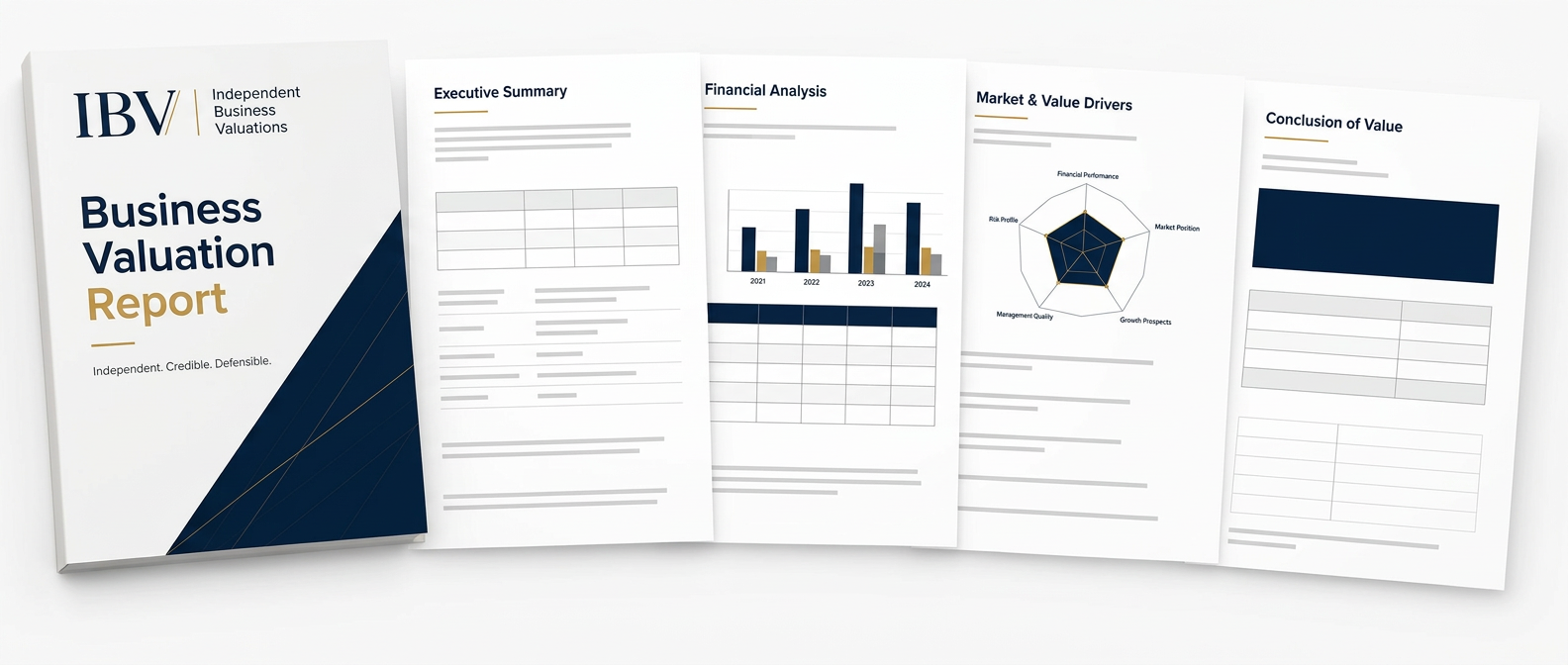
A clear, independent view of value — with the evidence behind it.
- Understand the conclusion — and what drives value.
- Gain an independent perspective. Move forward with confidence.
- Benchmark your business against industry performance.
- Identify strengths, risks and opportunities through SWOT analysis.
WHAT YOU GET IN A LIMITED SCOPE VALUATION REPORT
Inside your IBV™ report
Executive Summary
Conclusion of value · Method selected · Valuer qualifications
Detailed Report
Maintainable earnings · Cap rate / multiple · Premise of value
The Evidence Pack
SWOT analysis · Top Performers Report · RAVDA score
APES 225 voluntarily aligned. Report depth and supporting analysis follow your agreed package and engagement scope.
Free Valuation Call