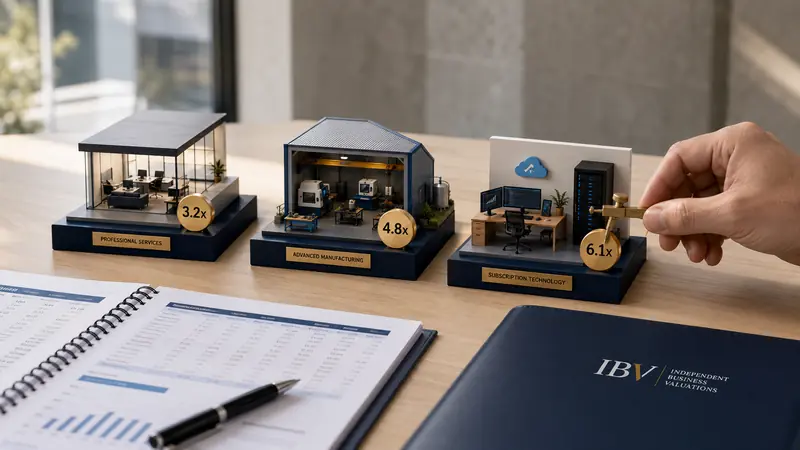

Key takeaways
Independence means no stake in the answer.
The fee does not change with the value concluded, and the valuer does not buy, sell or broker businesses. The report would read the same whether the figure were higher or lower.
Conflicts hide in fee structures, not just intentions.
A broker’s appraisal can be shaped by the listing it hopes to win, and a fee linked to the value or the transaction leaves a question the report cannot answer.
Independence matters most when the number will be challenged.
Tax positions, family law property division and shareholder exits are built for scrutiny. A documented, conflict-free process is often what settles the argument.
A fixed fee agreed before work begins removes the doubt.
When the fee is set by the scope of the engagement rather than the conclusion, no reader needs to wonder which came first—the number or the invoice.
Ask how a valuer is paid before you engage them.
Five direct questions—about broking, fee linkage, standards, qualifications and challenges—reveal most of what matters. A valuer who hedges on payment is telling you something.
What makes a business valuation independent
Independence means the valuer has no stake in the answer. The fee does not change with the value concluded. The valuer does not buy, sell or broker businesses, does not lend against them, and does not earn a commission from any transaction the valuation might inform. The conclusion rests on the evidence examined, and the report would read the same way whether the value turns out to be higher or lower than anyone hoped.
That sounds obvious, yet much of the advice market is structured differently. Brokers earn commissions on sales. Some advisers earn fees linked to transactions completing. Even well-meaning advisers can face pressure when the number affects another service they provide. Independence is not an accusation against those models; it is a recognition that a figure produced inside them answers a different question.
Professional standards treat independence as fundamental. IBV™ voluntarily aligns with APES 225 Valuation Services, which requires valuers within its framework to identify and manage threats to objectivity, and to decline engagements where those threats cannot be managed. IBV™ is not bound by it as a mandatory member standard but adheres to it voluntarily, and the IBV™ Independence Guarantee states the position in plain terms: no commissions, no hourly billing, no fee linked to the value concluded, and no interest in buying or selling your business.
Where conflicts of interest arise
The most common conflict is the broker who appraises the business and then lists it. A higher indicated price wins the listing; a realistic one may not. The seller hears the number they wanted, and the market corrects it later—after months on the market and a price reduction that weakens the negotiating position.
A subtler conflict arises when the valuer's other work depends on the outcome. An adviser who stands to manage a restructure, arrange finance or act in a sale has an interest in the transaction proceeding. That does not make their figure wrong, but it means the reader cannot separate the analysis from the incentive without more information.
There is also the conflict the client brings. Owners understandably want a number that supports their position—a higher value for a sale, a lower one for a buy-out or a tax matter. A valuer who adjusts the conclusion to suit the instruction has stopped valuing. The ATO's market valuation guidance expects a market value to be supported by an objective, documented process; a figure shaped by the desired outcome does not meet that expectation, whatever its label.
Why independence matters most for tax, family law and shareholder decisions
Some decisions tolerate approximation. Others are built for challenge. A value lodged in a tax return can be reviewed. A value dividing assets between separating partners will be examined by the other side's advisers. A price for a shareholder exit will be tested by everyone who stays.
In each case, the question is not only whether the number is right but whether the process behind it can be shown to be fair. An independent valuation answers both. The report discloses who instructed the valuer, what was valued, the evidence examined, the methods applied and the limitations accepted. A reader who disagrees with the conclusion can at least see that it was reached without a thumb on the scale—which is often what settles the argument.
This is also why the same business can need different engagements for different purposes. A valuation prepared for your own succession planning serves one master; one prepared for a family law proceeding must be credible to people who did not choose the valuer. Our guide to choosing between an accountant's letter and a valuation report looks at how the intended audience should shape the document.

Signed
A clear valuation conclusion starts with an agreed purpose, relevant evidence and disclosed assumptions. The report identifies the interest valued and explains the reasoning behind its conclusion.
Independence and the fee: why the fee is never linked to the value
The clearest test of independence is the fee structure. If the fee rises with the value concluded, every reader of the report must wonder which came first. If the fee is hourly and uncapped, the client cannot know the cost before committing. Neither arrangement is necessarily improper, but both leave a question the report cannot answer.
A Fixed Professional Fee removes the question. The fee is agreed in writing before work begins, set by the scope of the engagement—the purpose, the intended reliance and the complexity of the evidence—not by the value the analysis reaches. The three engagement levels range from the Calculated Value at $2,450 plus GST to a Full Conclusion of Value quoted on instructions, and none of them changes with the number on the final page.
What to ask a valuer before you engage them
Five questions reveal most of what matters. Do you or your firm buy, sell or broker businesses? Is your fee linked to the value concluded or the transaction proceeding? What standard does your report follow, and can I see a sample? Who will actually perform the analysis, and what are their qualifications? What happens if another party challenges the conclusion?
The answers should be direct. A valuer who cannot explain how they are paid, or who hedges on standards, is telling you something. Our resource on who can value a business in Australia covers qualifications and credentials in more detail, including what an AVI Certified Business Valuer designation represents.
The IBV™ Independence Guarantee
IBV™ exists because independence is the product. The practice does not sell businesses, does not act in disputes or court appointments, and does not accept fees contingent on outcomes. Every engagement is a genuine valuation—no appraisals or estimates dressed up as more—performed by Patrick Hillenbrand, an AVI Certified Business Valuer, and delivered under a Fixed Professional Fee agreed before work begins.
The guarantee is not a marketing line; it is the structural reason the conclusion can be trusted by people who did not commission it. When your adviser, the ATO or the other side of a transaction asks why they should accept the number, the answer starts here: the person who reached it had nothing to gain from it.
Independence inside the report itself
Independence is not only about who pays the valuer; it shows up in how the report is written. An independent report names its intended users and warns others against relying on it. It discloses the information it could not obtain rather than quietly assuming it away. It explains why a method was rejected, not just why another was chosen. And it states the valuation date plainly, because a value is only true at a point in time.
These features matter because they let a hostile reader test the work. A report that hides its limitations reads as advocacy. A report that discloses them reads as analysis—and analysis is what survives review. When the ATO, a former partner's advisers or a lender's credit team examines the conclusion, the disclosed reasoning is the defence.
The same discipline protects the client who commissioned the work. If circumstances change or the conclusion is later questioned, a documented, independent process shows that the decision was made responsibly on the evidence available at the time.
What independence is not
Independence does not mean the valuer is indifferent to your situation or forbidden from advising you. A good independent valuer helps you define the right question, explains what the evidence can and cannot support, and tells you honestly when a cheaper scope is sufficient or when the records are not yet ready to value. The loyalty is to the conclusion's integrity, not to a particular number.
Nor does independence mean the valuation ignores your knowledge of the business. The owner's insight into customers, operations and risks is essential evidence. The valuer's job is to test that knowledge against the financial record and the market context—not to discard it, and not to accept it uncritically.
Finally, independence does not guarantee that every reader will like the conclusion. It guarantees that the conclusion was reached the same way it would have been for any other client, on the same evidence, at the same fee. For a decision that others must accept, that consistency is the whole point.
Frequently asked questions
What does an independent business valuation mean?
The valuer has no stake in the answer. The fee does not change with the value concluded, the valuer does not buy, sell or broker businesses, and no commission depends on any transaction the valuation might inform. The conclusion rests on the evidence alone.
Why does independence matter in a business valuation?
Because many decisions built on a valuation—tax positions, family law property division, shareholder exits—are designed to be challenged. A figure produced by someone with a financial interest in the outcome gives the other side an easy argument. An independent, documented process removes it.
Is a business broker's appraisal independent?
Usually not. A broker earns a commission when the business sells, and a higher indicated price can help win the listing. That does not make the figure wrong, but the reader cannot separate the analysis from the incentive. An appraisal from a party to the transaction answers a different question.
How can I tell if a valuer is independent?
Ask five questions: Do you buy, sell or broker businesses? Is your fee linked to the value concluded or the transaction proceeding? What standard does your report follow? Who performs the analysis and what are their qualifications? What happens if the conclusion is challenged? The answers should be direct.
What is the IBV™ Independence Guarantee?
It states the practice's position in plain terms: no commissions, no hourly billing, no fee linked to the value concluded, and no interest in buying or selling your business. IBV™ does not act in disputes or court appointments, and every engagement is a genuine valuation under a Fixed Professional Fee agreed before work begins.
Does a fee linked to the value concluded matter?
Yes. If the fee rises with the value, every reader must wonder which came first. A Fixed Professional Fee set by the scope of the engagement—and agreed in writing before work begins—removes that question entirely.
What professional standard covers independence for valuers?
IBV™ voluntarily aligns with APES 225 Valuation Services, the standard issued by the Accounting Professional and Ethical Standards Board, which requires valuers in its framework to identify and manage threats to objectivity and to decline engagements where those threats cannot be managed. IBV™ voluntarily adheres to APES 225.
Source: APESB Valuation Services
Does the ATO care who prepared a valuation?
Yes. The ATO expects a market value to be supported by an objective, documented process prepared by an appropriately qualified person. A figure shaped by a desired outcome, or provided by someone with an interest in the transaction, does not meet that expectation.
Does independence mean the valuer ignores my knowledge of the business?
No. The owner's insight into customers, operations and risks is essential evidence. The valuer's job is to test that knowledge against the financial record and market context—neither discarding it nor accepting it uncritically.
Can an independent valuer still advise me on my options?
Yes. Independence does not mean indifference. A good independent valuer helps you define the right question, explains what the evidence can support, and tells you honestly when a narrower scope is sufficient. The loyalty is to the conclusion's integrity, not to a particular number.
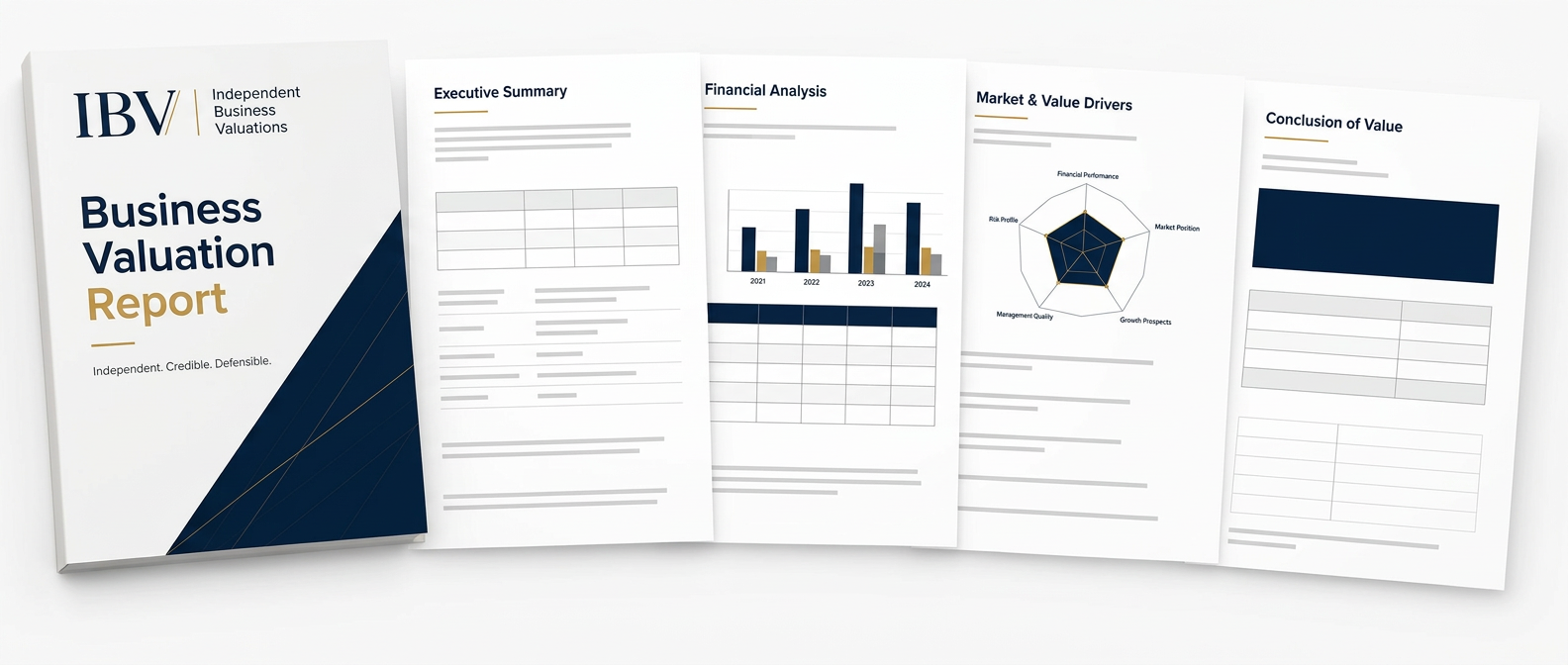
A clear, independent view of value — with the evidence behind it.
- Understand the conclusion — and what drives value.
- Gain an independent perspective. Move forward with confidence.
- Benchmark your business against industry performance.
- Identify strengths, risks and opportunities through SWOT analysis.
WHAT YOU GET IN A LIMITED SCOPE VALUATION REPORT
Inside your IBV™ report
Executive Summary
Conclusion of value · Method selected · Valuer qualifications
Detailed Report
Maintainable earnings · Cap rate / multiple · Premise of value
The Evidence Pack
SWOT analysis · Top Performers Report · RAVDA score
APES 225 voluntarily aligned. Report depth and supporting analysis follow your agreed package and engagement scope.
Free Valuation Call