
Define supportability in practical terms
A reader should be able to identify what was valued, why it was valued, the effective date and the evidence behind the conclusion. Supportability comes from a coherent chain of reasoning that another informed person can examine. It does not mean selecting the most convenient outcome from several methods or describing an opinion as certain when the evidence is limited.
Keep the instruction and boundary visible
Specify the legal interest, intended use and relevant ownership rights. Distinguish operating business value from equity value, and identify separate property or non-operating assets. If the instruction changes, record the change. A conclusion can become misleading when it is applied to a different transaction or interest even if the original analysis was carefully performed.
Make assumptions testable
Explain the source of financial information, proposed normalisation adjustments and important operating assumptions. Ask whether a replacement owner would need to incur costs removed from earnings. Connect forecasts to capacity, contracts and funding requirements. Separate management statements from corroborating documents, and disclose material contradictions rather than allowing the preferred assumption to pass without comment.

Signed
A clear valuation conclusion starts with an agreed purpose, relevant evidence and disclosed assumptions. The report identifies the interest valued and explains the reasoning behind its conclusion.
Explain method selection and cross-checks
The report should show why the adopted approach suits the business and available information. If another approach produces a different indication, investigate the reason instead of averaging results mechanically. Differences may arise from asset inclusion, financing, timing or inconsistent earnings definitions. A cross-check is useful when it tests the main conclusion, not when it merely repeats its assumptions.
Describe uncertainty without manufacturing precision
A missing contract, disputed asset ownership or unreliable forecast may materially affect the analysis. State the limitation and what further evidence could resolve it. A useful deliverable is an evidence and assumptions register showing significant inputs, their sources and unresolved issues. This makes the report easier for advisers to review and helps prevent confidence from being mistaken for proof.
Keep valuation and advice in their roles
Supportable valuation reasoning does not guarantee a sale price, financing, tax treatment or acceptance by an authority. Legal and tax requirements need appropriate adviser review. Read choosing a valuation provider, or consult the central fees page. Standard delivery is 5–7 business days after complete information and a signed engagement are received.
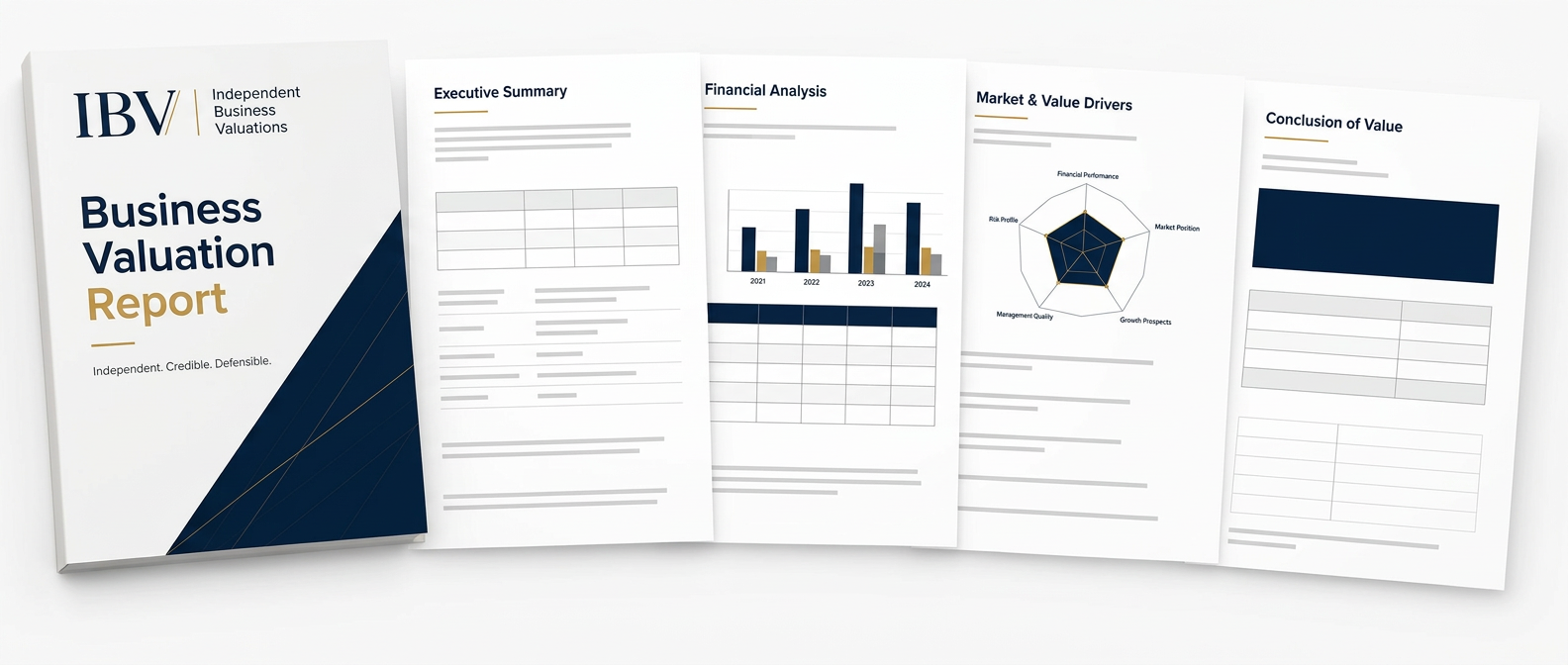
A clear, independent view of value — with the evidence behind it.
- Understand the conclusion — and what drives value.
- Gain an independent perspective. Move forward with confidence.
- Benchmark your business against industry performance.
- Identify strengths, risks and opportunities through SWOT analysis.
WHAT YOU GET IN A LIMITED SCOPE VALUATION REPORT
Inside your IBV™ report
Executive Summary
Conclusion of value · Method selected · Valuer qualifications
Detailed Report
Maintainable earnings · Cap rate / multiple · Premise of value
The Evidence Pack
SWOT analysis · Top Performers Report · RAVDA score
APES 225 voluntarily aligned. Report depth and supporting analysis follow your agreed package and engagement scope.
Free Valuation Call